
Understanding Payday Super
What is Payday Super?
Payday Super is one of the most significant changes to super in recent years. Introduced by the Australian Government to improve retirement outcomes and reduce unpaid super, it aligns super payments more closely with wages. At AustralianSuper, we're here to help you understand what this means for your business and support you every step of the way, so you can pay super with confidence.
ATO's Small Business Superannuation Clearing House (SBSCH) has closed
The SBSCH closed on 1 July 2026. If you previously made super payments through it, you’ll need an alternative solution. AustralianSuper offers eligible employers access to a clearing house solution, making it easy to pay super to multiple funds for your employees.
- Back
- Next
- Key information
- Resources
- FAQs
Key changes for employers
Super to be paid each payday
From 1 July 2026, instead of meeting a quarterly cut-off, super must be paid at the same time you pay salary and wages. For most employers, this means paying super at least weekly, fortnightly or monthly, depending on payroll frequency.
New way to calculate super
Qualifying Earnings (QE) is a new term introduced under Payday Super. It refers to the earnings used to calculate an employee’s Superannuation Guarantee (SG) contributions. SG contributions are calculated as 12% of QE, rather than Ordinary Time Earnings (OTE). While the term is new, QE largely aligns with the current OTE rules.
QE generally includes:
- The regular earnings as defined by the current SG rules
- Any portion of earnings that an employee has sacrificed for extra superannuation contributions through salary sacrifice
- Earnings paid to workers captured under the expanded definition of employee, including independent contractors paid mainly for their labour.
Deadlines for super payments
SG contributions must generally be received by your employees’ super funds within 7 business days of payday. For new employees, or employees who have changed funds, you’ll have a longer timeframe of 20 business days to make their first payment.
Increased reporting
Report both QE and super liabilities through Single Touch Payroll (STP) each pay cycle. This gives the ATO earlier visibility of unpaid or late super, meaning issues need to be identified and corrected quickly to avoid possible penalties.
System and payment improvements
Payday Super is supported by several system changes, designed to make paying super faster and more reliable.
These include:
- Closure of the Small Business Superannuation Clearing House (SBSCH). Check out the new Employer Portal. It’s one way to make your super payments with an integrated clearing house and self-service administration1.
- Faster payments via the New Payments Platform (NPP), meaning super contributions reach funds sooner. It supports Payday Super by validating fund details up-front and moving money in near real-time through services such as Osko®, PayID® and PayTo®.
- SuperStream system upgrades to reduce errors and failed payments. Clearer error messaging and improved Member Verification Request (MVR) responses, making issues easier to identify and fix.
Your go-to toolkit for Payday Super
Find the guidance you need, with practical resources designed to build confidence, support compliance and help you manage super payments each payday.
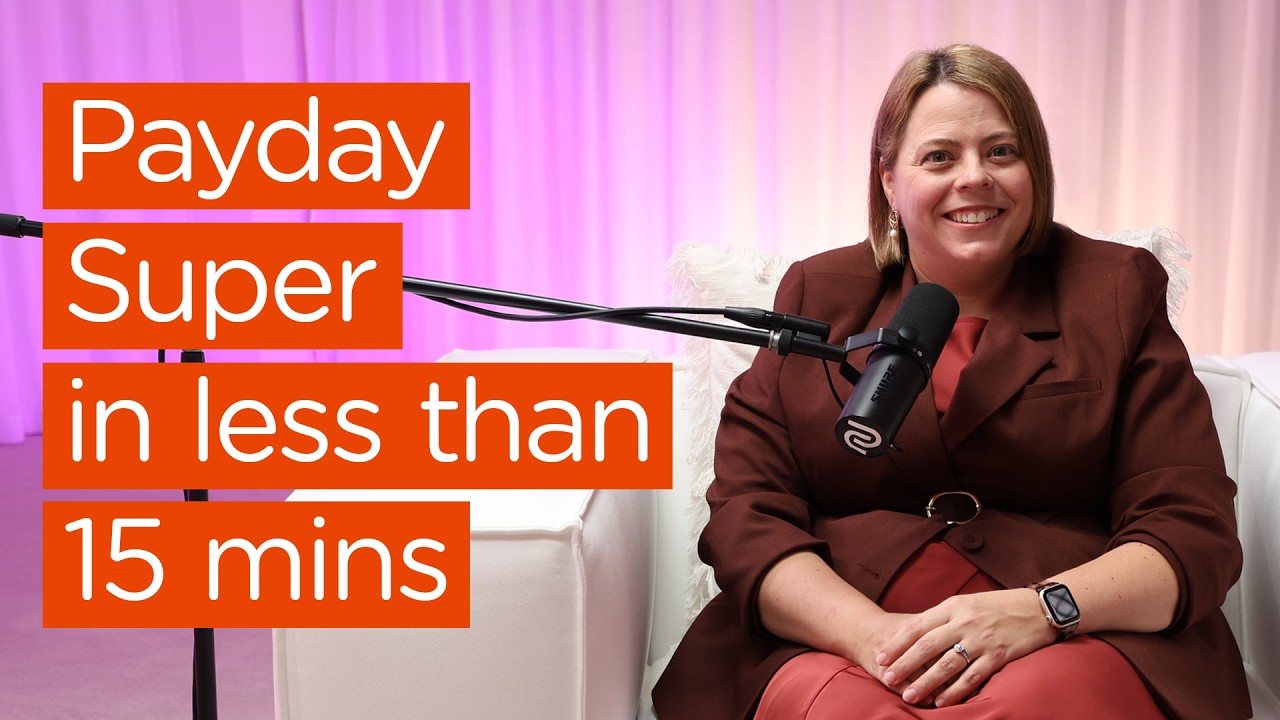
Get up to speed in under 15 minutes
A short podcast on the five key changes, what they mean for payroll, and the system updates businesses need to manage Payday Super.
Get up to speed in under 15 minutes
-
Show Transcript Hide Transcript
Today, we're talking all things Payday Super, what it means for employers and anyone responsible for paying super and wages. We'll break down why it matters and walk through the five key changes employees need to understand, including changes to how and when super is paid, how it's calculated and reported, and the system and process changes businesses need to be aware of so you can start preparing your workplace now.
I'm Ally McNeill and I'm joined today by Katie Pittman who works closely with employers and partners, supporting them through change and helping improve the overall experience of managing super for their business. Katie, let's start with a really simple question. What is Payday Super?
So, Payday Super starts on the 1st of July, 2026 and it's the alignment of super with wages and salary. So no more super being paid quarterly, it will be aligned to the payday cycle.
Why is Payday Super being introduced?
Now we know that majority of employers are doing the right thing. However, Payday Super addresses the unpaid and underpaid issue of employees not receiving their super. So by aligning super with wages, it gives everyone greater visibility of the super entitlements being paid. So when you check your super balance, you're able to see those contributions come in more frequently, rather than just four times a year. Now most super funds have apps as well and so employees have their balances and their contributions at their fingertips. So it's going to help them connect greater with their super. And then also more frequent reporting through Single Touch Payroll will ensure that the ATO gets greater visibility of super being paid on time and for the correct amount.
Katie, that sounds like a really big change. I have a lot of friends and family who own and run their own small businesses. Will they be expected to pay superannuation on the payday?
Under Payday Super, the payment must be received within seven business days of that payday. So that's business days as well, so keep in mind that doesn't include a Saturday or a Sunday or a public holiday for the whole state. So if it's Geelong Cup, doesn't count, but Melbourne Cup does count.
So you need to make sure that all of your super systems, so your clearing house, your payroll system, your banking timeframes all line up to allow for that to happen.
Can you just give an example of what that would look like?
So say you pay your staff fortnightly on a Friday, that payment of their super needs to be received by the super fund by the Tuesday of the following week.
Are there any exceptions?
There are, Ally. So the most important one is when you're making a payment to an employee for the first time to a super fund or an employee who changes super funds. So in those cases, you'll have up to 20 business days for that payment to be received by the super fund. And that's really just going to allow that first payment to go through smoothly and iron out any issues that might come up. And also in addition, there might be special situations. So it could be things like a natural disaster in which the ATO will make a determination, or it could be that the super fund is no longer compliant and you can't pay into that super fund.
Now we understand what Payday Super is, let's look at some of the other changes. How will super be calculated under Payday Super, and what does this mean for employers?
So the way super will be calculated will be based on something new called Qualifying Earnings. Now this is a new term that's going to describe the earnings base in which to calculate super under Payday Super. And it's basically an updated clearer version of Ordinary Time Earnings or OTE. For many employees, QE and OTE were going to look very similar, but Qualifying Earnings is defined more consistently so that employers know exactly what to include.
What actually goes into Qualifying Earnings?
So firstly, Ordinary Time Earnings, which is what the current Super Guarantee is calculated on. Secondly, salary sacrifice. So if you have any employees that sacrifice part of their salary to super, that would qualify as Qualifying Earnings had that not been sacrificed to superannuation. Thirdly, any commissions paid to employees are part of QE. And lastly, the earnings paid to workers captured under an expanded definition of employee. So that includes independent contractors paid mainly for their labour.
What do employers need to do to ensure they are paying according to these new calculations?
So they need to ensure that their payroll systems are set up to calculate Qualifying Earnings. So that might mean that any pay codes need to be mapped correctly to report Qualifying Earnings and calculate that correctly. The other thing is to make sure that their payroll systems are set up so they understand this new definition. And employers also need to factor in the new Maximum Contributions Base change.
What is the new Maximum Contributions Base change?
Now this is really for high income earners. And what it is, is it's a base in which you don't have to pay super over a certain amount. So that was a quarterly contribution cap, so you have four small buckets throughout the year. Now that's moving to a yearly bucket.
From all of the small business owners that I know, they talk a lot about reporting and admin. I understand that there's going to be some changes to reporting. What do employers need to know about the new ATO reporting?
ATO reporting isn't anything new. However, under Payday, it becomes much more important. So employers will need to report both Qualifying Earnings and super liability when they're reporting through Single Touch Payroll to the ATO.
And what is Single Touch Payroll?
So Single Touch Payroll, or STP, is a way that employers report information through to the ATO. So things such as wages and tax. It's a clear way for the ATO to see that things are being paid correctly. And under Payday Super, they'll be able to see super and the wages and be able to reconcile those payments.
Katie, what can employers do right now to get ready for this new way of reporting?
They need to make sure that their payroll systems can capture super liability and Qualifying Earnings and they need to be able to report both of those through Single Touch Payroll. They also need to make sure that their payroll processes are accurate so that each pay cycle is correct. And then make sure that everything is reported correctly through Single Touch Payroll.
The next big change is about penalties. What's changing?
Yes, so there is the Super Guarantee Charge and that's a penalty when employers don't pay on time or the correct amount. It's basically the ATO's way of ensuring that employees are getting their super entitlements.
So what makes up the Super Guarantee Charge?
So Ally, it's made of four parts. And the first part is the SG shortfall. So that's the amount of super that was incorrect or not paid to the super fund. The second part is notional earnings. Now that's an interest that's applied to the SG shortfall. The third is the administrative uplift. Now this one is determined based on previous behavior. So for repeat offences, there'll be a higher penalty. So it could be 25% to 50%. Now the ATO's mentioned they may show leniency when there's a voluntary disclosure. So if you notice something's gone wrong, it's best to let the ATO know. And the fourth change being the choice loadings. So that's where you don't pay to the employee's choice of fund.
So Katie, it sounds like there's a lot that employers need to be across with this change in addition to all the other things that they are keeping on top of every single day. Just talking about penalties, is there going to be any leniency the ATO gives to employers?
It's a really common question we're getting, Ally. The ATO has confirmed that they're going to take a practical compliance approach in that first year of Payday Super. So really for employers that are making genuine efforts to comply, you know, that might be fixing errors quickly or letting the ATO know if something goes wrong, that they may take a more lighter or educational approach to those employers. However, it's not a free pass. So if employers have repeatedly not paying or underpaying their employees the Super Guarantee Charge may apply.
Katie, it sounds like under Payday Super, there's going to be less wriggle room for businesses if they do something wrong or they make an error.
Yes, that's right, Ally. So employers need to be really clear on how super's calculated and paid because under Payday Super, even small errors can trigger that Super Guarantee Charge.
Let's talk systems. What's changing?
Yes, Ally. So there's three big changes coming to systems. So the first being the closure of the ATO's Small Business Super Clearing House. That's a big change for employers. The second being the greater use of the New Payments Platforms. That means faster payments for employers. And lastly, it's about SuperStream upgrades. So that's really trying to reduce the risk of any rejections coming through.
So let's start with the closure of the ATO's Small Business Super Clearing House. What does this mean for employers?
So from the 1st of July, 2026, the ATO will be shutting their Small Business Super Clearing House. So for any employers using that, they'll need to find a new solution. And AustralianSuper offers a free clearing house solution that they can move to.
Tell us more.
Yes, the Employer Portal includes a free clearing house that's Payday Super ready. So, it supports timely, high volume super payments, there are automated alerts and real time data checks. So that's going to help employers manage their obligations. And employers will also get access to an online employee onboarding and security features as well. And it's all been designed with changes like Payday Super in mind.
The other big system change is around payment speed. Can you tell us about the New Payments Platform and how it will support faster payments?
So the New Payments Platform is Australia's real time payment system. So it allows money to move between bank accounts almost instantly. So you might have used Osko or PayID before, the new payments platform is just an additional way for you to be able to pay super.
Let's talk SuperStream. What actually is it, and what's changing in the background for employers?
Now SuperStream has actually been around for quite a while and it's the standard way payroll systems, clearing houses and super funds exchange super payment information and member information. So what's changing now is there's going to be some upgrades designed to reduce errors and help payments flow more smoothly under Payday Super. Hopefully in practice, employers are going to see a couple of improvements. Firstly, there's the Member Verification Requests. So this is going to help employers check employees super fund and their member details before that super is paid, which will hopefully reduce any rejected or delayed contributions. And there's also going to be clearer error messages. So if something's wrong, there'll be more standardised and specific messages, making it hopefully quicker, clearer and easier to fix those issues.
I like those words, quicker, clearer and easier. It sounds like good news for employers. How will they benefit from all of these system changes?
So they're going to reduce delays in contributions reaching the super funds and they're going to lower those rejection rates caused by incorrect details. And they're going to make it easier for employers to meet that seven day requirement. And overall, they're going to hopefully make payroll run more smoothly under these new Payday Super rules.
Can we quickly recap the five changes we've talked about today?
Yes, so Ally, employers need to be across firstly, paying super on payday. It's no longer quarterly. This will start on the 1st of July. Second, using that Qualifying Earnings to calculate super. The third being reporting those Qualifying Earnings and super liability through Single Touch Payroll reporting. That fourth one is those Super Guarantee Charges and penalties. And last one, those system changes, so that's including the closure of that Small Business Super Clearing House, the New Payments Platform for faster payments, and SuperStream upgrades.
What do these changes mean to everyday payroll?
So Ally, every pay run matters and super needs to be accurate for each cycle. So there's fewer buffers and fix ups later on. There's more reliance on your payroll systems than your clearing houses, and that data quality. And there's clear reporting through Single Touch Payroll and that means more ATO visibility.
First of July is just around the corner. What should employers consider doing right now?
So clean up data, reviewing your payroll settings, work through internal awareness around your business and test processes ahead of first of July 2026.
We've covered a lot today and there's certainly so much to take in. So where can employers go if they've got more questions and need some more help and support?
So if you're an AustralianSuper employer, you can have access to extra support through our dedicated employer contact centre and specialist payment support team. We'll be able to help with things such as payroll changes, super payments, any clearing house questions and more complex issues as Payday Super approaches. And if you need a clearing house that will be ready for Payday Super the Employer Portal is available at no cost.
It sounds like employers don't have to navigate this on their own. What's the one thing you would say to employers as they get ready for Payday Super?
I would say start now. So those employers who begin testing, reviewing and updating now are the ones that are going to have the smoothest transition once Payday Super is up and running. And if you need any help, AustralianSuper is here to help you pay super with confidence.
A really important message for employers. Thanks for joining us today. Thanks so much for having me, Ally.
End transcript
Webinars
Payday Super – Early insights for businesses
Join AustralianSuper and the Australian Taxation Office as we share what we're seeing from the front line.
Payday Super – Early insights for businesses

-
Show transcript Hide transcript
Hello everyone, and welcome to today's AustralianSuper employer webinar, Payday Super: Early insights for businesses. My name is Erin Dingle, and I'll be your host for the next 60 minutes.
With Payday Super now in effect. We know employers are navigating new processes, systems and ways of working. Over the next hour, we're going to share what we're seeing from the front line.
And importantly, we're joined by a guest speaker from the ATO who will share their insights and observations. I'd like to acknowledge the Traditional Custodians of the lands we're each joining from today and their connections to land, sea and community. We pay our respects to Elders past and present and extend that respect to all Aboriginal and Torres Strait Islanders peoples.
Today I'm coming to you from Brisbane on the lands of the Turrbal people from the north side of the river and the Yuggera/Jagera people from the south side of the river, and we're joined by other presenters from right across the country.
Before we begin, it's important to be aware that today's presentation may include some general financial advice which does not take into account your personal situation, financial needs or objectives. We would recommend that before making a decision that you do read the relevant Product Disclosure Statement and Target Market Determination documents which are available either on the AustralianSuper website or by calling the Fund.
Now a few quick housekeeping items before we dive in. You can submit questions at any time using the Q&A panel. We have subject matter experts online in the background who will be answering as many questions as they can directly throughout the session. There'll also be time at the end for our panellists to answer some pre-submitted questions. We'll be sharing a copy of the recording with all of those who have registered for today's session after it's finished.
Now let's meet our panel. It’s a real privilege to be joined by Shane Moore, Acting Assistant Commissioner for Payday Super Implementation, Superannuation and Employer Obligations at the Australian Taxation Office. Also joining us is Luke Fraser, Head of Workplace Partnerships at AustralianSuper. Luke’s team supports over half a million businesses right across the country that contribute to super for their employees to AustralianSuper.
Then we'll hear from Katie Pittman, Senior Business Services Manager. Over the years, Katie has held roles across employer servicing, business solutions, transitions and operations, giving her a deep understanding of what matters to both businesses and their employees. We’ve built today's session around two perspectives, The ATO's view of how Payday Super is tracking and what AustralianSuper is seeing on the front line.
Luke Fraser will open with where we are seven weeks in. A quick recap of Payday Super and a walk through the contribution life cycle. So, we're all working from the same map of how super moves from payroll to the fund. Shane Moore from the ATO will then place Payday Super in the context of the broader superannuation system. Early implementation insights since 1 July, the year-one compliance approach and the key reminders and resources available to you.
And Katie Pittman will then get practical. She'll cover the five challenge areas we see most often and how to avoid them, what the response messages mean, the four most common errors, and how to fix them.
And then finish with ten tips to streamline your contributions. As I mentioned, there'll be time at the end for questions, so keep dropping them in the Q&A as we go. Our experts will be answering them throughout. Now, Luke, over to you.
Thanks very much, Erin, and welcome everyone. Great to be here with you today. For those that I haven't met, I lead the Workplace Partnerships team here at AustralianSuper. The national team support businesses across the country from single employee operations right through to some of Australia's largest employers. So, we've got a pretty broad view of how Payday Super is landing in practice. Our insights are based on what we're seeing every day through our contribution channels, but also through our frontline support teams.
The reason this matters is most of the issues that we're seeing can be prevented with a few simple checks and process adjustments. It's largely about data, it's largely about timing, and it's largely about process. Once you understand where the friction points are, there are usually pretty simple ways to address them within your payroll cycle.
Now before we get into what we're seeing, let's recap on the five key changes that we see payday having on employers. First, and certainly the most obvious is timing. Super is now paid at the same time as salary and wages rather than a minimum of quarterly.
Second, qualifying earnings or you may hear QE, it's a newly defined term and Super Guarantee is 12% of qualifying earnings. So, it's worth checking with your payroll system and that it's calculating on the right base. Third, reporting. You now report both qualifying earnings and the super liability through Single Touch Payroll, replacing previous reporting of Ordinary Time Earnings or the super liability.
Fourth, the compliance approach. So the Superannuation Guarantee Charge or SGC applies if the contribution isn't received by the fund in what we call an allocable format within seven business days.
Additional penalties of 25% or 50% of the SGC amount may also apply depending on if an employer and what their compliance history looks like.
Importantly, it's the receipt by the fund that counts, not the day you hit send and fifth how to pay. So, the ATO Small Business Clearing House closed on the 30th of June 2026 and SuperStream has been upgraded. We've seen the introduction of near real time payments through the New Payments Platform. Faster and clearer error messaging, member verification capability for first time contributions, and improved fund validation with early alerts on fund changes and mergers.
So, with that recap in mind, let's walk through how the contribution actually moves from your pay run to the fund and two clocks that I encourage you to keep an eye on.
Before we get into the specifics, I just want to have the shared mental model because once you have this picture in your head, everything we talk about for the rest of the day will fall into place nice and neatly. So, what you're looking at is the journey your super contribution takes from the moment you run payroll to the moment it lands in a member's account.
So, we see it across five key stages. Stage 1, the pay run. So, you calculate super for the pay cycle. This is where accuracy matters the most, because everything downstream from here inherits whatever you produce here.
Stage 2. You submit the contribution. The data and payment go together through your chosen channel, whether that's your payroll software, clearing house, or fund portal. Stage 3, SuperStream validation. The message is checked.
If something doesn't line up, like a missing member number or a mismatched date of birth, this is where that surfaces Stage 4 fund allocation. So, we take it from there and either allocate the contribution to the member's account or return it. And we have three business days to do that Stage 5 correction if it's required.
So, you review the error message response and fix the underlying detail and then resubmit. Now the two numbers, I encourage you to pay attention to are the ones at the bottom of the slide. So, the first is the employer clock. So super must be received in an allocable format by the fund within seven business days of payday.
So not just sent but received. The second is the fund clock. We have three business days to either allocate or return the contribution once we receive it. Now that distinction between sent and receive catches some people out, so we encourage you to build a bit of a buffer into your process rather than aiming to send on day 7. And do the seven days include weekends? No, they're business days. And it's important to know that if the fund returns the payment, the clock does not reset.
So, you need to make the relevant corrections and resubmit promptly, which is why data at that stage one really matters. The key point is errors in payroll data. Stage 1 creates extra work at stage 3 and then delays in that correction loop at stage 5. So together, these things can contribute to employers missing that seven business day deadline. So, what we're encouraging is putting in that extra effort upfront to fix the issues early within the payroll data. It can reduce workload and risk along the following and later stages.
So now that we've recapped those key changes with a shared view of the contribution cycle, let's have a look at what we're seeing seven weeks in. So good news, we are seven weeks in, eight days commenced and across the industry we haven't identified any major systemic issues. So the payments are flowing, funds are allocating and the overall picture is stable.
So that's a genuinely positive result for a change of this magnitude. That said, there are some common friction points we're hearing about from employers, which I'll touch on now. By far the number one source of issues is data quality. So, things like missing member numbers, tax file number gaps and mismatches in date of birth and contact details are important to know.
These aren't new problems, but under Payday Super, they're surfacing much faster and they cost you time because a contribution that can't be matched to a member can't actually be allocated. The second area is reconciliation friction. We're seeing contribution breakdowns arriving after payments.
We're seeing duplicate or invalid Payment Reference Numbers. As a reminder, PRN or Payment Reference Number is that unique link between a super payment and its SuperStream contribution data. We're also seeing payments that don't carry enough information for us to work out where they actually came from.
Each of these things requires a manual work to unwind, so important if we can try and get them right on Member Verification Request. We saw exactly what we thought we'd see, a really sharp spike in Member Verification Requests peaking around mid-July and then volumes have settled.
So, I think the key message is to take away from this side is it comes down to three things. One, accurate data, two, paying on time and three, establishing a clear and repeatable process that you can follow. Nearly everything that we're seeing tracks back to one of those three things.
So that's the early insights from me. You'll hear more about that from Katie later. But for the ATO's view, I'm going to hand over to Shane Moore, Acting Assistant Commissioner. So, Shane, over to you.
Thank you, Luke, and good afternoon, everyone, and thank you to AustralianSuper for the opportunity to speak with you all today. It's great to join the AustralianSuper team to provide an update. While the ATO has observed in Payday Super following the last update. So, Payday Super exists to address the $6.2 billion in unpaid super each year.
Payday Super is about ensuring more of this unpaid super makes its way into employee super accounts, improving the retirement income of millions of Australians. So today I'll cover 4 areas, our early observations since implementation, our compliance approach in the first year of Payday Super, practical tips for employers, key Payday Super reminders and what's next.
So, Payday Super has brought together government software providers, intermediaries, as well as employer and phone reps to deliver one of the largest superannuation reforms since 1992. While it's still early days, there have been some valuable early insights into how the super ecosystem is adapting to Payday Super. Before I get into those insights, I'd like to consider Payday Super in the broader context of the ATO strategic direction.
A 2026/27 corporate plan identifies implementing Payday Super as one of the key activities supporting our shift towards closing a payment gap.
Alongside activities such as simplifying the tax experience and enabling a move to real time taxation, we are aspiring to create a future where tax just happens, obligations can be met with confidence, interactions are simple, and people spend less time on tax.
Payday Super represents the fundamental change in how super is paid, bringing it into normal payroll cycle and helping employers stay on track from the start. By making super a recent part of each pay run, the reform supports better outcomes for employees while simplifying the process for employers.
It's about building a system that's more reliable or transparent and easier to manage day to day. Payday Super supports closing the payment gap or enabling timely and accurate payments, strengthens protection of employee entitlements and improves confidence in a super system.
Now, while the Payday Super reform is designed to help employees in getting things right, we also recognise that implementation of a change of this scale requires a practical and balanced compliance approach, which I will talk about later.
So, we thought first of the implementation, what's happened now in just under two months since the 1st of July. Early indications, as Luke has already stated, suggest Payday Super has had a successful start so far.
While we acknowledge there have been a few technical issues reported by some external partners and digital service providers, gateways and super funds, these have not prevented employers from paying super on payday.
Our intelligence at the ATO provides confidence that many employers are moving to more frequent super payments and implementation across the broader super ecosystem has largely been successful.
And our own intelligence and our own information show calls to our call centres along with our forecasts across both our superannuation, our single touch payroll and our clearing our SKUs suggesting to us that employees are adapting effectively to the new obligations supported by our guidance and communication products and our support terms.
Our website, saw an increase hit of 23% through July. Early insights from the SuperStream network indicate that the transaction error rates have not got worse, haven't increased proportionally despite the growth in contribution volumes.
Luke's already ran through the changes the SuperStream that we deployed with a new Member Verification Request and allows employers to check that employee details are correct before they make that first contribution.
And most large funds are ready to receive and process those new Member Verification Requests and of course AustralianSuper is one of those contributions made in through July has indicated. Now the most common error that's occurring in relation to SMSF's that don't have an active ESA that's important.
SMSF providers have this ESA to allow employees to pay contributions. If an employer can't pay a contribution to an SMSF because it doesn't have an active ESA, that employer is able to pay their contribution to their default fund.
That's important and we are reminding trust SMSF trustees to maintain an active ESA to avoid those outcomes. The clearing houses have reported record volumes in the first few weeks of the Payday Super.
Those record volumes continue which supports a positive trend in the adoption of Payday Super so good funds have advised that process nearly half a million member of the case Member Verification Request, which obviously designed to reduce errors.
We are seeing an increased adoption of fast payments through the New Payments Platform and we are hearing that some clearing houses are passing payments through the funds within minutes of it being paid by an employer, noting though that that is only some clearing houses, not all.
Yeah, the ATO has also seen an extra $5.7 billion paid in Super Guarantee in the month of July compared to July 25. Media coverage has generally been mostly positive since it started July and there's been strong engagement.
We are also seeing large numbers of employers reporting Qualifying Earnings in the Single Touch Payroll to the effect that I have 70% of employers are now reporting QE to the ATO. That's indicating to us that most employers are now moving to a Payday Super cadence or paying superannuation.
While we're seeing QE reported in STP, we are seeing some things that aren't quite right in the QE reporting in some of those reports. These are things such as bonuses, task allowances, paid lead cash hours and adjustments of salary sacrifice not appearing in QE as the ATO would expect them to see.
The ATO does have guidance on our website letting employers know how to work with their pay code mapping and through their software to make sure those QE amounts are report are accurate. It’s important that QE amount is correct and accurate for the ATO to be undertake our compliance on Payday Super.
They're taken together, those early indicators that your stakeholders are actively engaging with the changes, and the core elements of supporting Payday Super are operating as intended now to support industry during the early transition period.
The ATO did establish the Super Stream and hyper care meeting with broader industry representatives alongside the Payday Super Contributions Implementation and Reference group.
These forums are addressing practical implementation issues and emerging observations, and they've already helped industry participants quickly identify and resolve issues, including payment and data mismatches, preventing some employers using newer providers.
One of the clearest lessons from the first month of Payday Super is that data quality matters more than ever. The ecosystem is processing significantly more transactions and doing so faster and more frequently.
Where employers, payroll providers, and funds have high-quality member and payment information straight through, processing rates are very strong. Many of the operational issues being discussed through hyper care are not technology failures. But reflections of the importance of accurate and complete data in a more real time environment.
Also, as Luke already highlighted, the ATO Small Business Clearing House closed at 11:59 PM on the 30th of June this year. Although that clearing house is now closed, we are still receiving a small number of payments to the clearing house. These payments are being refunded to employers along with an email finding that payment could not be processed.
Advising them to make to make alternative arrangements for any future super contributions. Any employees that may receive this correspondence should refer to our Payday Super resources on the ATO website and also the new and improved super product register that helps you identify alternate payroll options and super services to help employers meet their obligations.
So, moving on to our compliance approach to our next slide. So as some of you may be aware, in January of this year, we finalised our practical compliance guide 2026 slash 1. And this practical compliance guide was developed to recognise that employers may not have had sufficient time to deploy, test and embed their changes within their payoff systems and business processes prior to the law commencing on 1 July 26.
The approach for the first year of Payday Super will recognise that employers that try to comply with Payday Super by paying on a payday cycle but do not meet the legislative timeframes, for example due to errors or rejected contributions, but correct pays errors as soon as practical will not be the focus of the ATO compliance resource.
Employers that continue to pay quarterly will be considered a medium risk and employers who have unpaid SG after the quarterly due dates will be classified as high risk under the Practical Compliance Guide. The ATO will allocate our compliance resources to high-risk employers ahead of any medium risk employers in respect of any QE days in the first year of Payday Super.
This is in addition to continuing to follow up with employers who are still not meeting their obligations under the old quarterly regime. This Practical Compliance Guide is a key tool to help employers understand what they need to do and something goes wrong.
Our key message is to pay anything owed to the fund as soon as possible. In those scenarios, it helps with decisions like should I lodge a voluntary disclosure statement. This remains an important message to support employers through the first year of Payday Super implementation. Basing the assurance provided by the PCG, we would like to reiterate that there is no expectation for employers to be checking on whether super payments have reached the fund on time every time that they make a payment.
The expectation is simply that employees are checking for errors and resolving errors as soon as possible. Also, to support preparation for this change, four Payday Super companion rulings were published outlining how some of these new rules apply.
LCR 2026, one through to three, provide guidance for employers on the new payday rules regarding application and transitional provisions, eligible contributions and the calculation and assessment of a Super Guarantee charge that will all finalise on the 5th of August. There is an interim decision impact statement also published on the 5th of August in relation to the remaining law companion ruling covering qualifying earnings.
This finalisation of this law companion ruling has been delayed due to a Federal Court decision of the Victorian Department of Education and the Commissioner of Taxation that has an impact on OTE Ordinary Times earnings. That therefore has an impact potentially on to Qualifying Earnings. So that law companion ruling will be published in the outcome of the appeal to that case.
On the next slide, we have some tips, some key reminders. The Payday Super is about more than simply paying super more frequently. It's helping to create and maintain a system that makes it easier for employers who are trying to do the right thing to make their obligations.
And for those who are deliberately not complying, it's much harder to hide based on early intel issues and questions we're seeing emerge. These are the key messages I encourage you as employers to reinforce. Our first key message for employers is for them to review what they're doing now and ensure they're paying super on payday.
We encourage you not to ignore rejected payments or reporting errors as issues are generally easier to resolve when they are identified and addressed early. This aligns with our first-year compliance messaging. The employers who are trying to comply and quickly fix errors will not be the focus of ATO compliance action.
The second reminder is to check your payroll software and underlying configurations. Employers now need a report announcement both qualifying earnings and super liability via their single attached payroll software.
The third reminder is to look beyond payroll and consider the end-to-end process. Payday Super can affect payroll teams, finance teams, payment processes, clearing house arrangements, governance and internal controls.
Employers may need to consider whether they have business processes or procedures that need to change to pay more frequently, including the super was previously paid quarterly by an accounts payable team separately from the payroll team, such as in the payment of contractors.
The fourth reminder is to ensure employers understand the transition period. July represented a unique period. Where some employers may have been managing previously quarterly obligations as well as new Payday Super requirements, it's important for employers to understand how the contributions made during July were allocated.
The key message is that now in August, all contributions are applied under the Payday Super frame. In July, the first contributions were allocated to the final quarterly regime payment.
The fifth reminder is to be proactive, encourage you as employers to review the processes, investigate exceptions and resolve issues before they accumulate. Also ensure you review your onboarding processes for new employees and contractors, particularly where employee fund details need to be captured and validated.
Particularly for anyone using clearing houses or interacting with new providers, we encourage you to check that the data has been sent correctly and that any payment or data mismatches are followed up quickly.
Alongside these practical reminders, there are a few important points about monitoring, reporting and what comes next for employers. The key theme across all these messages is that successful Payday Super implementation depends on good systems, quality data and effective business processes, not simply meeting a new payment deadline.
The ATO has released fact sheets, checklists and videos to support employers with the transition to Payday Super. These resources are available on the ATO website under Payday Super Resources.
These resources will help employers understand the changes, how we're approaching compliance in the first year of Payday Super. Collectively, our focus should be on supporting you as employers as Payday Super becomes embedded into your natural business operations.
Remember, at its core of this reform is helping Australians receive their super entitlement sooner, identifying issues earlier and better protecting retirement savings. Thank you, Luke and Katie, and I'm really looking forward to exploring some of these themes further during today's discussion. Now I'm handing over to Katie.
Really appreciate that, Shane, Thanks so much for sharing with us. So hello, I'm Katie Pittman and I'm the Senior Business Services Manager here at AustralianSuper. So, my team speaks with employers every day and over the past few months we've been helping businesses navigate the real-world challenges that have emerged with Payday Super.
So, we're seeing employees encounter a range of issues, big and small, and we've worked alongside them to find solutions as well. And those conversations have really given us some valuable insights into what's working well and where organisations are still experiencing some challenges. And today I'd like to share some of those most common issues we're seeing and along with some practical learnings as well to really help you stay ahead of them as well.
So, let's start with the five common challenge areas. So, I want to walk through these specific challenge areas we're seeing most often on that frontline. So, all five are quite manageable and most are also preventable if you know where to look. So, this first one we've heard is a few times already, data quality.
So small data errors can actually have quite a big impact. So, it could be things like a placeholder date of birth, it could be a typo, possibly a surname, an incorrect address can also be enough to prevent contributions from being matched correctly.
And including key identifiers such as tax file numbers and member account numbers and ensuring that any of that information provide is accurate and up to date can really help avoid delays and return contributions. Secondly, payroll and clearinghouse readiness.
So as some of these new contribution capabilities such as that Member Verification Request and faster payments that introduced across the industry, those implementation timeframes can differ between providers.
So, it's worthwhile having a conversation with your payroll provider or clearing house to understand what capabilities are available to you and how they can support your business. Third, payment and data pairing.
So, during the transition period, the industry saw some challenges matching those payments and the contribution information. And now the good news is most of these issues have now been resolved. The fourth one we're seeing was verification volumes and Luke hinted at this one earlier.
So, we're seeing those Member Verification Request volumes increase, increase across the industry. So, a big driver that we saw is that many employers are reviewing their super processes ahead of Payday Super and in some cases moving providers or implementing new systems. So that transaction activity, it creates additional verification demands.
And it's a really good reminder to remember that these MVRs or member verification requests, they're used for their intended purpose. So that would be at the stage of onboarding or if you have a staff member that comes to you with a fund change and keep that processing efficient across the network for everyone.
And fifth and it's one that July transition. So, July was a unique one-time overlap. Where we saw many of those employees managing their final April to June quarterly SG payment at the same time as that first payday super cycle.
So, while that overlap was quite unique, it did provide some really valuable insights into this payroll and contribution processes. Now I want to dig in a little bit more into that first one, that data quality for a bit more context and support.
So here are just a few simple checks that can really help improve the quality of your contributions and reduce the likelihood of any delays or exceptions. So firstly, it's checking those employee details, so making sure that the names, date of births, addresses, tax numbers as well were provided, and any payroll IDs are accurate and up to date.
Next, we'd be checking those super fund details, so the fund name, unique super identifier or USI and that member number for the employee. And if you're paying to a self-managed super fund, take extra care around those ones.
So, you should have that ABN and electronic service address for all those self-managed super funds and then check those contribution details. So that. Correct? Is a type of that everything OK with the amount there as well?
Now the fourth one it's a little bit of a true one, but it doesn't come up very often. Check your employer details as well. So that'd be around checking the information such as your business name and ABN is accurate and is also aligned across payroll clearing house and super systems as well as their fund.
So, we also recommend keeping a record of any employer IDs that are provided by the funds that you're paying into, as these can often are needed when investigating a payment or a contribution issue. And finally, ensure that your payment and contribution data as submitted together so they can be matched and processed efficiently.
So, most providers do this, but good to know where yours stands. Now, these are also just some extra simple data hygiene rules to keep in mind. So, if you see an optional field and it can't be completed accurately, it's best to leave it blank rather than using placeholder information.
And if you have an employee here who comes and updates the details with you, it's a really good chance to encourage them to check and update their super fund as well, as most funds won't accept member detail changes that come from employers.
Now they seem quite simple, these checks, but really can go a long way towards reducing errors, avoiding delays and helping those contributions.
Reach your employees accounts as smoothly as possible. Now, big one, how do you prevent errors before they happen? Now the single biggest lever you have is at onboarding. So, when it comes to those new employees or employees who have changed super fund, it's really worth taking advantage of that 20-business day window that's available for the first contribution.
So, it's a good chance to take that time to capture, validate and verify before that first payday. So, this starts by capturing and curving those key employee and super fund details as I mentioned earlier, then validating that information is complete, accurate and as we said before, consistent across all your systems.
So, where you have your payroll provider or your clearing house can support it, this is where you may be able to submit that Member Verification Request or MVR. So, this MVR is there to help you verify super fund details before that first contribution is even made. So that's really going to come back and reduce that likelihood of any avoidable errors or delays.
And if you do have any issues that pop up, you'll have time to act early and resolve it before any of those deadlines get close. Now that MVR, that verification request, that's a little hint to some of those response messages.
Now let's look at some of the other response messages that are out there. So, you may have started to see or hear some of these response messages as part of Payday Super. And no need to be intimidated by all those acronyms as well. They're just simply messages that help confirm that information is correct or also highlight something that needs attention.
And you can really think of them in a logical sequence. So firstly, we have that Member Verification Request or MVR, and this one's a new one. So that's that message you'll send before the first contribution just to verify that the member and fund details are correct at the super fund area.
And then the super fund will return what is called an MVOR or a member verification outcome response. So, this message is there to confirm whether those details you sent through are valid and correct. This will then allow you to update any details before you've even set that first contribution.
Now, in some situations, you'll also send what is called an MRR or a Member Registration Request.
So, this is used when a member account needs to be set up at a super fund or even if a change of details needs to be sent through and this one's likely through your default fund. Now, that file will then respond with a Member Registration Outcome Request or MROR, and that will let you know whether that registration or update was successful.
And if relevant, we'll return the new member number if applicable.
Now, once you're ready to contribute, the contribution tier itself is set by what's called a CTR or Contribution Transaction Request. So, if something can't be processed, you'll receive what's called a Contribution Transaction Error response or a CTR.
So, this one's really important. This is your signal to look into that issue, fix the root cause in your payroll, and then go on and resubmit.
So the key takeaway here across these messages is that they're there to help you and they're simply operational messages that will help you identify issues in early so they can be resolved before they create any larger problems. Now, understanding messages is one thing, but what does it look like in practice?
So, I'm going to walk through some of the most common responses employers are seeing and what they typically mean. So here we have the four most common error messages we're seeing and what they mean and what to do about them.
And the good news, again, it comes back to data quality, and all of them are quite fixable as well. So, the first one we see first is number not found or no account exists. Now this usually means that details you've sent don't match what the Superfund holds or simply that employee doesn't have an account with that fund.
Now this is your chance to double check that unique super identifier, their membership number, their tax file number, date of birth, and name spelling. Now if something's wrong, fix that one in your payroll system and not just in that contribution file.
Otherwise, it will come back to a haunt you next payday. And if you're finding the details look right on your side, it's best to confirm with the employee about that super fund. What we're seeing is, you know, we're having people rolling out to other super funds and it happens quite often not letting payroll know.
So, contact that employee, confirm their details of their fund, and then go on and resubmit. Now, the second one, no account exists and no default relationship with a fund. So, this one's a little step further. So not only do the details not match an existing member, you're also not set up as a registered employer with that fund.
So, they can't create that new member account for you. So firstly, confirm those employees details are correct. Then importantly go and check your business is registered as an employer with that super fund and that super fund has been correctly configured in your payroll system or clearing house as your default fund.
Now once that's in place, you can go and resubmit. The third one we're seeing is contributions can't be accepted. So, this one, the account exists but it can't take your employer contributions.
Now, the reasons for this, it might be a closed product, like maybe it's a corporate plan or there's a defined benefit arrangement attached to that, or it could even be a pension account. So unfortunately, no fix inside payroll for this one.
You'll need to go back to the employee and ask for alternative fund details and then update your payroll and resubmit. Now the last one we're seeing contributions can't be accepted due to age or eligibility restrictions.
So, this one can come down to a data entry issue. So rather than a genuine eligibility problem. So, start by checking that date of birth in payroll, because a mistyped year is often the common culprit for that one.
Now, if the date of birth is right, confirm that the payment genuinely meets eligibility rules. And if it's a personal contribution, check that the employee has also provided their tax file number. Now, it's important to remember, as Luke's touched on this before, that clock is always running.
So that contribution will need to reach the fund within seven business days. So act on any error response messages the day they arrive rather than waiting for that next pay run. Now we've covered some of these common errors and fixes and I really want to finish with some more of that practical side of things.
So, there are ten tips on the screen, and I won't go through all of them, but I really want to draw out a few that can make a real difference to ensure your pay cycle runs more smoothly.
Firstly, make sure you know where your SuperStream error messages are coming back to in your relevant portal, with a notification going to the most responsible person who can then go and act on those.
Secondly, enable that New Payment Platforms on your business bank account and in your payroll or clearing house. As Shane mentioned earlier, this one gives you almost near real time settlement, which means that money lands with the super fund faster and your reconciliation is cleaner as well.
So with that seven-business day window, taking a day or two out of that pavement leg will give you so much more breathing room if something does need correcting. Thirdly, and we've seen this one pop up, aligning ABN in your SuperStream messages with the ABN in your single touch payroll reporting.
So where businesses run on multiple entities or there's a possibility of a restructure, they used to quietly drift apart.
And a mismatch there will create reconciliation problems that are really quite difficult to unpick after the fact but can be prevented. And fourthly, keep evidence of your corrections.
So, dates on what you did and the outcome. So then if a question comes up later about a late or short for payment, that record is what demonstrates that you acted promptly.
And fifth, checking with your default fund. So, make sure that your business is registered correctly as an employer and that the right contacts are also listed on your account.
So, it's not uncommon for us to see communications going to former employees simply because contact details haven't been updated. And a quick check now can prevent any missed messages and unnecessary follow up down the track.
And then the bonus tip. And this one's an important one, voluntary disclosure. So, if you've realised you've missed a payment, pay that correct amount to the fund as soon as you realise that error, as long as you haven't already received a notice of assessment.
So, tell any HR about that shortfall before they issued assessment may help any lower help lower the penalties that apply. So don't sit on it. Act early and be upfront. I'm now going to pass that to Luke for a quick word on some of the support available. Luke, over to you.
Thanks so much Katie. And as everyone will have heard, Katie and the team have been very busy supporting employers, analysing the data and hopefully some of those tips resonated with you. There was a lot of information across the three speakers this morning, this afternoon, I should say.
What I wanted to share here is that you're not doing it on your own and that there is support available. AustralianSuper has some really practical information that we have shared with you today, but we will continue to share that as Payday Super evolves. If you haven't already, you'll see it on the screen there. Please visit our Payday Super website for the latest updates.
On there you'll find a Payday Super checklist which outlines some practical steps you can take, some which you will have heard today. We also update on that site the frequently asked questions. So, as we get new questions that come through that aren't up on there, we will republish them. So, a good one to check.
Another thing that I wanted to talk about quickly was we have introduced a new Employer Portal and it's really to help employers manage their super obligations in a Payday Super environment. It brings together things like contribution submission, data validation, error alerts, reporting, and support all in that one secure place. And it gives employers better visibility and control over that contribution process.
It supports a range of payment methods. You've heard about the NPP or New Payments Platform, so it supports that. It helps with employee onboarding, choice of fund capture. I've seen some questions in the chat around stapling. So, it's got an integrated ATO stapling look up feature that you can activate.
In addition, it's also got a virtual bank account so that it helps employers track contribution payments. It's particularly useful for things like refunds or corrections. I should also say that you you've got access to our people.
So, a range of people on the call today that you've heard from a range of people behind the scenes answering questions. We've got a dedicated employer contact centre if you want to talk things through as well as Payday Super further develops, we'll, we'll obviously keep you up to date.
We'll keep you informed. Keep an eye on your inbox if you on, if we have your valid email, we'll send some things through to you as they evolve. But I have seen a very active Q&A section, Erin, which is good.
People have got lots of questions. I know there were a lot of pre submitted questions as well. So, I might hand over to you to walk us through some of the questions that people might have had. Thanks, Luke. Yes, a lot of a lot of information to take in today and a lot of questions being asked.
So, I'd like to invite all our panellists back onto the screen. I'd now like to start with yourself, Luke.
So, one of the biggest themes is about what starts the Payday Super clock. When must the fund receive the contribution and is it ok to submit early or schedule a pay run in advance? Well, big question and I thought we agreed the hard ones were going to Shane, but I'll give it a crack to start with.
I think this is probably one of the more important questions or things to know around Payday Super.
And the clock starts from the actual payday, not the end of the pay, not when you enter the payrun into payroll, but the actual payday.
So, to be on time, the contribution needs to reach the employee's super fund. And you've heard this a few times within seven business days of that payday. And the fund needs enough information, you heard me say allocable needs enough information to be able to allocate that into a member's account.
So, it's really about when the fund receives and then can process the contribution, not just when it's submitted to the clearing house. So that's why he will have heard us encourage you to try and build in enough time for payroll clearing house fund processing. And where possible, and I know it can be hard, people in payroll are very busy to pay super on payday where you can.
Now we have had, as you rightly point out, Erin, a number of questions around setting up pay runs early because of things like say, annual leave or Christmas shutdowns. And I'm sure there's a long list of other planned absences. That’s understandable and something many businesses do.
I think the key thing to remember here is that the deadline is still linked to that actual pay date. So, it's worth checking with your payroll and clearing house provider how they handle those early instructions. And what I mean by that is some will release and process them straight away and others might hold them to that nominated pay dates or important nuance there.
But yeah, that's me. Kicked it off. Question one. We got a question two. Hopefully not for me. Yes, thanks for that, Luke. So yes, the dates don't change, but there will be nuances with your different payroll or clearinghouse providers.
Now this one's not for you. I'm going to throw over to Katie now. So, Katie, do employees need a separate super payment for every ad hoc or out of cycle pay? And what changes when the payment is final termination pay?
Ok, so good news is not every out of cycle payment automatically means you will need to run a separate super payment. So, if you've got an employee on a regular payroll cycle and you'd make it genuine out of cycle payment.
So, things like a bonus, a commission allowance, back payment or payment in advance, that associated super can generally be paid by 7 business days after that employee's next regular payday. So, in many cases it can simply be picked up in that next normal super contribution rather than requiring a separate run there.
Now where I will say this, where payroll teams need to be a little bit more careful is around terminations. So, if someone's leaving and it isn't going to be another regular payday for that employee, don't assume that that same flexibility is available.
In those cases. You need to make sure that you've considered that super obligation as part of your termination process rather than waiting for a future payroll cycle that might never occur. And the other point I'd call out is this concession is really aimed at genuine out of cycle payments within an established payroll schedule.
So that doesn't, that doesn't work quite the same way with paydays and genuinely irregular. So, if you're dealing with a little bit more of an unusual scenario, it's worth checking with the ATO guidance on that one. Thanks, Erin. And that's great guidance. Thanks for that, Katie.
Now Shane, over to you, kept you waiting. Can you explain OTE versus qualifying earnings or QE and the practical reconciliation employees should perform between payroll super and STP?
Yeah, thanks. Thanks, Erin. So in in many ways QE and OTE are exactly the same thing. Many employers, it'll be exactly as it was before the, and it always does just flow through into STP reporting. So, what we had before was employers were reporting either OTE or super liability to the ATO.
And in most cases, most employers reporting just super liability, which is the total amount that is superable for an employer. So, and only a very small percentage reported OTE to us. But under Payday Super, we do require now QE and Super Liability.
It's important to be able to work out because previously employees may not necessarily have had to work out what OTE was because they paid super on the Super liability amount because that's what was determined in a reward or an industrial agreement or added like a contract with an employee to pay a particular amount based on a wage or bonuses, et cetera.
So, where QE then changes that is it also includes everything that was always in OTE, but it also includes commissions and salary sacrifice does come in. So, it's really in many cases OTE plus a couple of other.
So, in your pay codes mapping within your payroll system instead of make sure it'll work out what is OTE and what's QE. Now the ATO does have a good table on our website that explains all the different types of pay, pay codes or you know, types of payments an employer may make.
And it has a column that says whether it's OTE and a column whether it's also QE and whether it's either in or out. So that's a really good reference to point back to work out well what's in OTE, what's in QE and then also what is out of those components as well.
But it's important to note that super liability reporting you do today has not changed. The only change in STP is to report a QE amount. So, the super liability will still be that larger amount where they're under an award or an agreement or additional voluntary payments.
They sit under the suitable liability field as they do today. And that's the year-to-date report in STP. The QE, it's just the QE component. And then of course, the ATO would then expect to see 12% of that QE amount appear into the super fund as a Super Guarantee contribution.
I hope that's answered the question, Erin. I didn't feel the need to either add or correct anything that Luke or Katie have said on their questions. It's been very long.
On behalf of the ATO, if I must say, that's fantastic. t's where we're sourcing all our information from. So thanks for that, Shane. And yes, if you have any queries or any concerns, I love a cheat sheet.
So go along to the ATO website and have a look at that table.
So, Luke, as Shane mentioned earlier, the ATO Small Business Superannuation Clearing House, what a mouthful has now closed.
What payment options should employees use and can they schedule reoccurring direct debits, Efts or other automated payments?
Thanks, Erin. Yeah, that's a question that we're getting a fair bit as well. We have tens of thousands of businesses paying to us through the ATO Small Business Clearinghouse, which you rightly pointed out is now closed.
I think the key point is that employees need to use a SuperStream compliant solution, whether that's their payroll software or commercial clearing house, a fund that might provide an employer portal as well. Shane I think you mentioned earlier that there is a link on the ATO website that goes through some of the providers that are in market that people might want to consider which is good.
So that's a good source for AustralianSuper employers. The Employer Portal does offer that integrated clearinghouse solution and tools to help manage contributions and management. I think you know many employees use payroll software. You know some names that come to mind, Xero, QuickBooks and many others.
And they have an integrated payment solution that goes into that payroll process. Large and more complex businesses, we sometimes see them working with what we would call like a commercial clearing house provider and having a direct relationship with them so they can build out that to make their needs. And I, I guess the key message is what one size doesn't fit all.
It's good to do your research and choose an option that works best for you so that you can meet your Payday Super requirements and, you know, get things right and get it done on time. So that's all I'd say, Erin. Cheers. Thanks, Luke.
So, yeah, as well as making sure that you got all your data correct upfront, making sure that you choose a solution that fits your purposes for your business. All right, Katie, I'm going to go to you next.
And this one, I have seen so many different variations pop up in the Q&A alongside throughout the session. So what should an employer do when a new starter has no fund details, no stapled fund results, missing TFN or delayed SMSF information?
Thanks, Erin. So yeah, this is one of those areas we're getting things right up front. It's really going to help save a lot of time earlier. So, when you're in onboarding that new employee, you'll be collecting that choice of fund information. Checking staple fund details is now part of that same process as well. So, if you're finding a valid fund isn't available through either of those pathways.
So that's where your default fund will come into play. So good news, I've mentioned this before, that first contribution for a new employee or first contribution for a new fund as well. That's clear.
Want to put in there as well for an existing employee, you have that extended time for over 20 business days from payday. So it'll give you some additional time to work through onboarding verification, and you can really use that time proactively rather than waiting until that deadline approaches.
So, we're seeing a range of situations that will need a bit of a follow-ups. So things like missing tax for numbers, you know, it could be employees providing details for an account that's being closed or a fund that's merged or some of that fund information that can't be validated straight away.
So, for employers, one of the most important checks is confirming that that fund can accept contributions and if the details provided a complete and current. So, verifying those details through that superfund look up or it's sending that member verification request.
And if you have that employee who chooses a self-managed superfund, for example, you'll need to have that information such as electronic service address or ESA before contributions be made. Now as Jay mentioned earlier, if that information is not provided, that is not a valid fund choice.
So that's where you'll need to go back to that employee. And as we mentioned, if we don't get that information, that's where your default fund will come into effect. So, you'll be able to pay into your default fund. So, the earlier those checks happen, the easier it is to resolve before any of those issues pop up, before that first contribution is due as well. So, default fund is very important for this.
Thanks Katie. Yes, that's what I was taking away from that default fund very important. So that's another thing to put on our checklist. So, keeping in order of things.
Shane, I've got a triple barrelled one for you here and it's about late contributions. And what happens next. So firstly, are charges or penalties applied? Will the ATO contact the employer and are there any concessions for small businesses? Oh, a triple banger there, Erin. So, I'll probably come on that from a few angles there.
So obviously where an employer realises that they are late on contribution, the first advice from the ATO is pay that to the fund. As soon as you realise you're late, you don't need to pay it to the ATO.
You don't need to do anything at that point; you just need to pay the amount to the fund as soon as you can.
And we acknowledge these things can happen. Mistakes can happen and you know, there could be cash flow issues. But you just need to pay that to the fund as soon as you can. It then leans into probably a couple of different options for the employer from that point. There is now underpaid a super an option for an employer to lodge a voluntary disclosure statement with us and say that they were late.
They can say the amount they paid, you know, and, and when it was paid to the fund. And then obviously the ATO would could, may issue a Super Guarantee Charge assessment because of that disclosure.
Lodging a voluntary disclosure statement does not mean the ATO will raise an assessment. It just means you are notifying the ATO that there was a mistake and you've taken corrective action. That is just a tool the ATO uses in its compliance approach.
The other and of course lodging a voluntary disclosure statement does have a minimising impact on if the ATO did come at a later point and say that we noticed that payments were late or amount was unpaid.
The administrator, the admin uplift starts at a higher rate than if you had lodged a voluntary disclosure statement. Of course, the nominal interest is crystallised when you lodge a voluntary disclosure statement. So there are some tax benefits in lodging a voluntary disclosure statement.
The ATO in case we did come knocking at a later point from a compliance position. Now of course during the first year, the ATO has taken a very soft approach with compliance, and we'll only be dealing with those employers who are high risk, which means those are employers who have not paid and do sit in a high.
And pretty much not paying and are likely to have had broader issues as well. So that would be high risk from us, an employee who's a little bit late is by nature of the practical compliance got a low risk, our perspective. Wonderful. Thanks for that, Shane.
That sounds like a very measured approach. And what I'm taking away from that is, is get up to speed on what the changes are. If you try and do the right thing and if you figure out you've done the wrong thing, tell the ATO and you'll be treated a little bit more kindly. So we're actually right on time at the moment.
So that will be our last question for today. Our team will take some of those pre submitted questions and put some answers up on our FAQ on our Payday Super website as Luke mentioned earlier. So, Luke, Shane, Katie, thank you all for your time today for answering these questions being put in the spotlight.
And thank you to all our employers who have joined us for this information. I hope you found it useful and an emailed copy of the presentation will be sent out to all of those who have registered.
If you have any further questions about your own Payday Super arrangements, reach out to your partnership manager if you have one or our dedicated employer contact centre to help you. Thanks again for your time and have a great day.
End transcript
Understanding Payday Super
Learn how Payday Super works and what it means for your business.
Understanding Payday Super

-
Show Transcript Hide Transcript
Hello everyone. We've had a record turnout today, so thank you for joining us. My name is Andrew Ribeiro. I'm a Marketing Manager here at AustralianSuper and it's our great pleasure to host today's webinar on Payday Super, a very important piece of legislation that will affect employers right across the country.
I’d first like to, on behalf of all participants, acknowledge the traditional custodians of country throughout Australia and their continuing connection to sea, land, and community. We pay our respects to Elders past and present and extend that respect to all Aboriginal and Torres Strait Islander peoples.
Today I'm coming to you from Sydney, the lands of the Gadigal people of the Eora Nation, and we're joined by other AustralianSuper presenters from right across the country. We're joined by Luke Fraser, who's the Head of Workplace Partnerships, Katie Pittman, who's a Senior Business Services Manager and Craig Wilson, Manager for Business Development B2B.
Before we begin, I'd like to draw your attention to some important information on this slide about today's session. The information is correct at the date of preparation and may be subject to change. The session may include general financial advice, which doesn't take into account your personal objectives, situations, or needs. I'll now hand over to Luke. Thank you.
My name is Luke Fraser. I'm the Head of Workplace Partnerships at AustralianSuper. The Workplace team provides services to over 480,000 businesses across many interesting industries, whether that's manufacturing, transport and logistics, technology, hospitality, agriculture and beyond.
Now Payday Super, well, it's certainly been on our mind for the last two years and with the implementation marching closer every day, we’re here to support businesses to navigate this new legislation.
Look, we've got a lot to cover today as we explore this new era of Payday Super, including the key changes, implementation in practice, as well as the potential impacts. How you can prepare as well as how AustralianSuper can support.
Then we'll open for Q&A. If you have questions while we go, please use the Q&A button at the top of the screen and one of our specialists will look to answer you. We will have time at the end for a few questions. We'll do our very best to get to as many as we possibly can. And if we happen to miss you, please reach out to one of our team members who can support you.
So, with all that said, let's get into it.
So that the superannuation landscape is undergoing a significant period of change. However, over the last 20 years I've been in the industry, there's always been change.
I remember when I first started, I would collect the checks from the mailroom. And pick up the contribution printed out from the fax machine, pages and pages of employee names and contribution amounts.
Then came Choice of Superfund legislation, which saw the introduction of clearing house systems and really the start of digitisation. The establishment of SuperStream and data payment standards followed and finally we saw Single Touch Payroll introduced.
We're on the cusp of a new era now ushering in the largest transformation to date.
This includes the implementation of Payday Super which sees payment of super contributions move from quarterly to align with every payday. We also see SuperStream version 3 which brings new enhanced data standards, smarter error messaging, real time fund and real time fund validation to streamline payments and reduce mistakes. We also see new technology like the new payments platform or NPP, which drives real time payments.
So, all of this means that employers must adapt quickly to stay compliant. So upfront, I'm going to touch on the five key changes that we see and then I'll hand over to Katie and me later on. We'll unpack each one as we go.
So, the obvious one I've already mentioned, which is we see people or employers need to pay super at the same time as they pay wages as opposed to quarterly. Katie will run you through a few of the extensions that exist on that.
We also see the introduction of the new concept of quarterly qualifying earnings.
The third one we see is enhanced reporting requirements for Single Touch Payroll, meaning employers need to report qualifying earnings and the super liability to the ATO at the same time as salary and wages. The ATO will then use this STP data to monitor superannuation compliance in real time and compare it with the information received from super funds, who also have new reporting requirements.
We also see the introduction of the Super Guarantee Charge, which applies if super is not received by the fund in an allocable format within seven business days.
Then there are a range of SuperStream upgrades as well, and that coincides with the closure of the ATO Small Business Clearing House.
The key SuperStream changes include: the enablement of real time payment methods via the New Payment Platform, a new error messaging framework which will support faster and clearer error messaging when submitting contributions. We see the new member verification capabilities come in for first time contributions. Through the new member verification request functionality, we also see the fund validation service improvements with early alerts on fund changes like mergers, which we know are a source of frustration for payroll now.
So, to unpack each one of them, I'll hand over to Katie and I'll be back soon. Over to you, Katie.
Thanks, Luke. My name is Katie Pittman. Now today we're going to walk you through those five key changes under Payday Super. Now, by the end of this session, we really want you to have a clear sense of what you need to do next, what to keep an eye on early, and where to go if you need any support along the way. So, let's get started.
Now the first big change kicks in from the 1st of July 2026 and it's a fundamental shift in how super is paid. So, under Payday Super employers will be moving from paying super quarterly to paying it every payday. So that means that super needs to be paid and received by the employees' super fund within seven business days of paying wages.
Now this is a significant change, so let's break down what it actually means in practice. At a simple level, the rule is this that every time you run payroll, you'll also need to pay super and that super payment must reach the employee’s super fund within seven business days of payday. Now you're going to hear this referred to as the qualifying earnings day or QE day, but the key thing to remember is the outcome here. That contribution needs to be received by the fund and ready to be allocated to the member within that seven-day window.
So, this is where the data really matters. If the information you submit is incomplete or incorrect and that payment gets rejected and it can't be allocated, that deadline might not be met unless you can amend the error and return it quickly.
Now, as Luke hinted, there are a few exceptions to this seven-day rule, and the main one is for new employees, or you have employees who change their super funds during their employment. So, in those situations, whether you're contributing to that fund for the first time, you'll have up to 20 business days to make the payment. So that extra time there is just to allow for any account setups to make sure the details are right as well. Now extensions will also apply in certain circumstances, so things such as natural disasters or when a fund becomes non-compliant or temporarily unable to accept contributions.
Now a business day. We talk about these seven business days. A business day is any day that isn't a Saturday, Sunday or a public holiday for the whole state or territory. So, you might have a holiday that only applies for part of the state. So, a metro public holiday like the Royal Hobart Show Day, that will still count as a business day.
Now one last thing to keep front of mind, that payment is only considered on time when the fund receives it and not when you actually send the payment. So, it means that you'll need to factor in your clearing house processing times because those late payments may trigger the Super Guarantee Charge.
Now the second key change on the Payday Super is this concept of qualifying earnings or QE. Now qualifying earnings is a new term for the payments that you'll make to employees that count towards calculating their Super Guarantee under Payday Super. So, what exactly are qualifying earnings?
So qualifying earnings is bringing together a number of different payments and terms. So, things such as ordinary time earnings, which is already what the current Super Guarantee is calculated on, also includes salary sacrifice. So, if you have an employee who's sacrificing part of their salary to super and that would qualify as qualifying earnings had they not been sacrificed to superannuation. Also, all commissions paid to employees are part of qualifying earnings. And lastly, it's going to be an expanded definition. So, earnings paid to workers that are captured under this expanded definition of employee. So, a good example is independent contractors who are paid mainly for their labour.
Now what you'll find with qualifying earnings is that sometimes a payment might fit into more than one category of qualifying earnings. So, for example, you might have a commission that's also considered part of ordinary time earnings. So, in those cases, that payment is on the counts of one, so no need to double up when calculating the super there.
Now for most employers, and we really want to stress this, that move to qualifying earnings away from ordinary time earnings won't actually affect how much super you're already paying for your staff. However, with these changes, it's really important to start reviewing your payroll systems now and cross-check employee contributions to ensure that the correct Super Guarantee rates and amounts are applied.
Now with the introduction of Payday Super, the third key change we're seeing is how employers will need to report their superannuation information. So previously you would have reported either ordinary time earnings or super liability for that employee through your single touch payroll. However, under these new changes, employers must now report both qualifying earnings and the super liability for each employee through single touch payroll.
Now this change is quite important because it ensures that the super contributions are calculated accurately for each and every pay cycle and not just at the end of the quarter. Now to get ready, you need to make sure that your payroll systems can capture and report these qualifying earnings and super liability through your single touch payroll.
Now let's take a look at enforcement and compliance. What's required to stay on track and what happens if you don't. So, this fourth change and probably one of the bigger ones we're seeing in the Payday Super changes is how penalties are going to apply when payments are late or incorrect. So, this is where the Super Guarantee Charge or as we love an acronym, the SGC comes in, so let's break down what that means.
Now the Super Guarantee Charge applies if you don't pay the minimum Super Guarantee amount in full and on time, or if you don't follow fund choice rules. So, under Payday Super, this is now going to apply per payday and not quarterly. Now that Super Guarantee Charge is calculated over four parts. So, the first thing will be the unpaid super amount after any late contributions, the second being an interest charge on any unpaid super. Third is an extra admin charge which is generally based on compliance history and lastly a choice loading if you didn't follow your employee's choice of fund.
Now with Payday Super, the penalties have also increased. So, the ATO is going to calculate your Super Guarantee Charge and if you don't pay, you could face penalties of 25% or up to 50% if repeated. So previously the Super Guarantee Charge would apply quarterly. However, from the 1st of July 2026, it's going to apply every payday if deadlines aren't met, and it's going to mean that your payroll systems and processes need to be ready for these faster payments.
Now a big question we've been getting from employees so far is that are there any concessions or grace periods for businesses, especially during this first year of Payday Super? Now the ATO has released a practical compliance guideline for that first year of Payday Super and it gives us a clear indication of how they're going to approach compliance when this change comes in. Unfortunately, there's no formal exemptions for small businesses. These rules apply to everyone across the board.
And most importantly, the ATO has been clear that they're going to take a facilitative, common-sense approach in this first year. They're going to use a risk-based triage model. So really what that means is they're going to focus their compliance activity on higher risk behaviour rather than trying to order everyone at once. So, if your business is considered low risk, you're far less likely to be a priority for any compliance action.
So, the next obvious question would be, what would make me low risk? Now from the ATO's perspective, low risk employers tend to have strong governance and fit for purpose payroll and super systems. Thirdly, they have processes that support paying super correctly and on time. And fourthly, they're actively preparing for Payday Super. So, in other words, they're really looking at employers who are making that general genuine effort to comply.
However, the ATO understands that mistakes can happen, so what really matters is how you're going to respond. If you fix errors promptly and demonstrate strong governance behind the scenes, you're going to stay in the low-risk category, and this is going to reduce the chances of audits and penalties.
So, the message is start preparing today. Those employers who are showing a genuine effort to comply, so things such as upgrading your systems, participating in any testing ahead of payday and documenting your transition will be treated leniently. Penalties will apply for late payments, but the ATO is going to consider intent and effort. So, number one, get across your payroll processes now and two, make sure you know how to respond quickly if errors do occur.
Now these first four changes we've covered the what's and some of these paid super rules, new terminologies and employer obligations. Now let's talk about how we're going to make that work in practice and we're going to talk through some of the improvements that'll hopefully make these obligations so they're easier for you to meet. So over to you, Luke.
Thanks, Katie. And really good to hear that the ATO is taking a more practical facilitative approach on compliance in the first year.
But one of the really important things from a Payday Super perspective is the key enabler of the New Payments Platform which will enable faster payments.
So NPP, another acronym, is Australia's modern payment infrastructure designed for fast, secure and data rich payments, and it's already part of everyday life. In fact, almost $7 billion moves through NPP each day. So, if you've ever sent money using pay ID or Osco, you've used NPP. The payment arrives in seconds, not days. It's quick, simple and available 24/7, including weekends and public holidays.
So, under Payday Super contributions made through payroll systems and clearing houses using NPP are likely to be received by the super fund sooner than other payment method methods, and this ultimately helps reduce delays.
So, looking ahead from 1 July 2026, all super funds like AustralianSuper must be able to receive NPP payments. Employers like you on the call today will also be able to work with your digital service providers or clearing houses to decide whether you can use NPP for making contributions.
Another great feature that is being rolled out as part of Payday Super is called the Member Verification Request or again MVR. It will help employers check if an employee super fund is ready to receive payments before the money is sent by the employer.
Before making a contribution, your payroll system or clearing house can send a quick message to the super fund and the message checks that the funds unique code or as we call it in the industry, unique superannuation identifier is valid. That the fund is open and able to accept payments, and it also checks whether the employee's details like their name and date of birth match what the super fund has on record. If there's a problem, you'll find out straight away so that you can fix it before you send the payment. So, this means fewer mistakes, less chances of payments being rejected, and helps you meet the tighter deadlines under Payday Super.
To help bring the importance of this feature to life, I was at a Payday Super conference a few weeks ago and some of the industry experts were suggesting that if the MVR existed today, there would be a 90% reduction on the existing areas that occur in the ecosystem.
So needless to say, it's important for you to check with your payroll provider or clearing house provider or super fund whether they will have MVR built and enabled by 1 July 2026.
Now talking about errors, I'm going to hand back to Katie, who's going to take you through the new error messaging framework. Over to you, Katie.
Thanks, Luke. So, another Payday Super functionality on the way will be enhanced error messaging. So, error messages are getting clearer and more helpful when you pay super.
So, in the past, if you had a problem with a super payment, you might get a vague message like data element contained an unexpected value and it's made it really hard to know what's gone wrong. Now the new system is going to give you specific messages. For example, if you forgot to enter a surname, the message will say surname is mandatory and must be provided. Now these clear messages are going to make it much easier to fix mistakes quickly and ensure that any payments aren't delayed.
Now there's also going to be three different types of error messages. So, number one, you'll have an error message where this must be fixed before you can submit your payment. You'll also possibly get a warning. So, this one says that it needs fixing to meet compliance, but you might find the payment still goes through. And lastly, information. So, this one's just a warning or some information you need to know, but it won't stop the payment going through.
Another major improvement will be also an upgrade to the fund validation service. So, this is an ATO service that sits behind a clearing house or your digital service provider and acts like a real time directory of superfund details. So, before a contribution will be sent, the service will be checked to make sure that the fund and product details are correct and up to date, giving you early warnings about any key superfund changes. So, another one being mergers to avoid any contribution issues or rejections.
The big message we want to say is I want to encourage everyone to review the error and warning messages you're currently receiving through SuperStream for your existing staff. So be aware of where you can find them, because right now some of those payments might still go through, even if there's a warning or a minor issue.
However, once Payday Super kicks off, those same issues could cause payments to be rejected. By checking and fixing those ahead of time, you can avoid any surprises and reduce that risk of bounce backs and rejected payments once Payday Super is up and running.
Now let's focus on some of the practical impacts of Payday Super, especially for employees. There are just three key areas we want to focus on here.
So firstly, independent contractors. Now, even if they invoice you or have an ABN, you may be required to pay super for them. So, under Payday Super, they're going to be treated the same as other employees. So, any super contribution will need to reach the employees fund within seven business days of their payday or invoice being paid.
Secondly, contribution caps and timings. So, with Payday Super, up to 15 months’ worth of contributions in the worst-case scenario could fall into the next financial year due to this transition. So, this timing shift means there's a real risk of employees exceeding their super caps, which can trigger extra tax. So, it might be worthwhile communicating this ahead of time to your staff, especially high-income earners, as the ATO is going to send notices directly to employees if any caps are breached.
And another key change that we're kind of seeing come out through Payday Super is there'll be no more quarterly averaging or washing up of errors throughout the quarter instead of reconciling. Those every few months is going to become part of every pay cycle, so it means that those that are responsible for super will need to have some new checks in place so that errors don't slip through.
And finally, just a quick update on three contribution changes also effective from the 1st of July.
So firstly, the maximum contribution base, it's moving from a quarterly limit to an annual cap for the 2026/2027 year. So, once an employee's earnings hit the maximum contribution in a financial year, no further super contributions are required for the rest of that year. So, this change is going to simplify monitoring for any high-income earners and for those in payroll. So, you need to make sure that your payroll systems are updated, and any high-income employees are possibly informed if they're going to be affected by that change.
Secondly, allocation timeframes. So super funds currently have around 20 business days to allocate or return contributions. However, from the 1st of July 2026, that's going to drop down to three business days. So, what you're going to find is that your employees are going to get a faster visibility of the super being paid on their end and you'll also see quicker turnarounds and bounce backs if there's any reconciliation issues.
And finally stapled funds. So currently employees must provide employers with their choice of super fund when they start and if no choice form is received, then go and request stapled fund details from the ATO. However, from 1st of July 2026 employers can actually request that stapled fund and offer it as well to the employee at the same time you prefer the choice to them. So, this is going to streamline your onboarding and hopefully reduce delays in setting up contributions for that first time. And importantly, you'll still need to offer a choice of fund and follow the ATO process if the employee doesn't submit their choice.
Now that's all the changes we're seeing ahead of Payday Super and I'm going to pass back to Luke.
Thanks, Katie. Last one to round it out from me, the ATO Small Business Clearing House. Many of the people on the call, if you use it, you may have heard already that that will be closing from 1 July 2026. So, the Small Business Clearing House was that free service that the ATO provided to help small businesses meet their super obligations. To be frank, the platform was not going to be fit for purpose for a Payday Super environment.
So, if you're one of the 200 odd thousand employers using the clearing house. Firstly, don't worry because there's other options available, but if you're an existing user, really starting to explore and evaluate other solutions now is important. Don't leave it to the last minute. Look at what your payroll provider or your super fund offers and check their clearing house solution is Payday Super ready and has some of those features that we were talking about before.
So just to recap, I wanted to give you a few practical tips that might help you prepare. So, first and foremost, if you haven't started, that's OK, but now is the time to plan. Map out your key stakeholders, who your suppliers are, what your key dependencies are, and the main milestones. Consider things like your internal engagement, how you communicate with your employees. What your data quality looks like, what your systems are, and I'll touch on each of these briefly.
From an internal stakeholder engagement point of view, depending on the size of your business, this could include HR, payroll, IT and technology and finance teams. So, for finance, things like how are they actually going to make the payments? Who's going to be making them? What will the impact be for cash flow of more frequent payments if you're moving towards real time payments via NPP? You may need to speak to your bank so you can send and receive NPP payments and also check whether this requires any changes in access or delegations.
For technology, if you're going to be using new systems, what does testing and deployment look like and are there any process changes that are required?
For HR, you want to start reviewing your onboarding practices. Review your onboarding materials that mention payment cycles for superannuation. What do employee policies say? Things like employment contracts, enterprise agreements as well. How do you present choice of fund today, your default fund and your stapled fund? How are you going to present all of them in a Payday Super environment to ensure you're meeting the legislative requirements? Also consider how you capture and record choice of fund for new starters. If your process is manual today, really consider what digital options are available.
If you're using a digital onboarding provider like Katie mentioned, it's also important to be aware of legislative change on that front. So, the Treasury Laws Amendment Supporting Choice in Superannuation and Other Measures Bill 2025 was introduced last year. The framework proposes a ban on advertising superannuation products during onboarding. And introduces changes to how employers present an employee stapled fund. So, it's worth keeping across this for when the final legislation passes.
And if you’re using a third-party onboarding solution today, things that you might want to get familiar with include whether the platform currently advertises superannuation funds during that onboarding moment when the final legislation is passed, how the system will be updated to accommodate presenting an employee stapled fund during the choice of fund process. And lastly, how the platform will ensure it only advertises funds that have met the APRA My Super performance test from 1 July 2026.
Now, thinking about employees, take this opportunity to let them know about Payday Super and that it's coming and what it means for them. Let them know that it's going to likely mean contributions appear in their account more frequently. You also might want to send separate comms to higher income earners about the move from a quarterly contribution cap to an indexed annual threshold. You'll also want to let employees know how you plan to deal with the intersection between FY26, which is current rules, and FY27, which is Payday Super rules where they could see up to 15 months of contributions for in FY27.
From a data quality perspective, really take the time now to clean up your existing records. So even just purely your employee records, you know their personal information like name, date of birth, tax file number, address. Make sure this is recorded correctly in your payroll system or your HRIS system. Confirm the accuracy of each employees' super fund record, super fund name that's current, that you've got the right unique super superannuation identifier and that member numbers are correct, particularly where we've seen a number of mergers or funds close over the years, sot that's going to be really important for Payday Super.
And for clearing house and payroll providers, ensure your clearing house and payroll provider are going to be set up to be able to manage more frequent contributions and even yourself consider start paying in line with Payday Super now. It's important to start this dialogue with your payroll providers or clearing houses and understand when new functionality will be rolled out. So, we spoke about before the member verification request. I was at a conference a few weeks ago which I mentioned and people in the industry were saying that some providers are not going to have that feature available on day one. Confirm your payroll software will be able to report qualifying earnings and single touch payroll to the ATO at the same time. Confirm the deployment times and what changes you might need to make, and importantly, whether there's any costs that you need to consider.
Katie mentioned this before but start reviewing the SuperStream error messages that you get today. Right now, payments that you're making that trigger warnings might still go through, but after 1 July 2026, they could and are likely to be returned. Knowing where to check for rejected payment errors and how to fix them is important, so it'll either be your clearing house or your digital service provider that sends these today. Make sure you get familiar with that.
We've been talking a lot today. You're probably thinking, how's AustralianSuper going to help? Well, obviously we'll continue to communicate like this and run sessions like this to ensure everyone is well informed. We also have a Payday Super website that we'll continue to update. As new information becomes available, this is where you can access the Payday Super checklist that you see on screen. We also have a range of emails coming out that are due and scheduled soon to keep you informed along the way, so keep an eye on your inbox.
We have a national partnership and service team who are on hand to help guide you through the change and we've also invested really heavily into our employer tools. So, the Employer Portal is a major one of them and it's a one-stop shop for employers, which Craig will talk you through now. So, I'll hand over to you, Craig.
Thanks for that Luke. And thank you everyone for having me here today. And I'm really excited. I get the fun part today. I get to talk to you about how AustralianSuper can help support you through these changes. But I'm also a little nervous today as well. I know I've spoken to a few of the businesses online today and they're expecting big things from me. So, I'm hoping I can meet your lofty standards.
So, talking about lofty standards, I think this slide here goes to the heart of what we're about here at AustralianSuper and that's where we're more than a super fund. We're a real partner for progress for your business and we're committed to that delivering that world class domestic service and support. And we do that by having real people on the ground here in Australia that know payroll and compliance and know what it's like to run a business. But also, for that, we know you need other help like simpler, smarter digital tools and that's where our new Employer Portal comes in.
And really, you can break it down into two parts. Firstly, it's that clearing house to help you be compliant in making your super contributions, but it also has an onboarding solution to make sure you're capturing those fund choice details and make sure you're compliant with stapling.
Now we're providing this new Employer Portal platform at no cost for our registered employers. Once again, it goes to the heart of what we want to do. Our focus is on keeping things simple. We want to take complexity off your plate and allow you to focus on your business and your people.
Now the next slide here, it's a high-level overview of the benefits of our new Employer Portal, but I'm just going to focus on three points here. Firstly, the enhanced security with multi-factor authentication for you, the enhanced reporting, being able to track contribution and its progress. And also, the user-friendly interface, so that real time alerts and data validation that's going to reduce errors in time.
But what I'm most excited about is the digital onboarding solution that's integrated into the portal and which you can also have your own branding on as well. So, it's really simple rather than sending paper as you may have in the past, you'll send a link to your new employee, and this will request their tax file declaration, their bank account details and their super choice. And when that's in the Employer Portal, you can then download that and then upload that to your HR or payroll system.
Now the portal will also help you comply with stapling as it'll talk directly to the ATO.
And now here it is, drumroll, please let the trumpets blare. We just wanted to give you a little taste of our new Employer Portal to see what it's like. And show you the user-friendly interface and then how easy it is to navigate around the place and just to manage your super in a simpler way, all in a secure location.
Now, if you'd like to stay across what's coming next, you can scan the QR code on screen to be notified when the new Employer Portal opens. But also, if you have questions, you can scan the QR code, in which case we'll get back to you after the webinar on these.
Now that also gives us time to open to a few questions that we've been getting today. And let me just see what we've been getting in.
OK, now first question that I'll get to answer is it's around the ATO Small Business Clearing House and we've got here there's been a few businesses ask about you know with the clearing house finishing on the 30th of June, what should they do next? Luke, are there any suggestions you have for this and what assistance AustralianSuper can provide? Thanks.
Thanks, Craig. And it's a good question. I touched on this a little earlier, but I also did mention in the that there's nearly 200 odd thousand businesses still using the platform and you know, we've been engaging with the ATO, and I've seen their messaging change as well. They're moving from awareness to really encouraging people to act now because that platform will not work. Post 1 July and you do not want to be scrambling for a new solution then.
So, I would say act now, start your transition early. Don't wait until June 2026. Look, at what your alternatives are so that you can avoid any compliance risks and that last minute stress we know that comes with testing systems and the like.
So now there's a range of different options out there. First, you can check with your existing payroll software, so platforms like Xero, Myob, QuickBooks, Reckon and others generally have an integrated clearing house solution. Obviously, there may be costs involved with that people will want to consider, but that integration can be favourable.
We're a super fund. There are many other super funds. Craig has given you a prequel into what our new solution looks like, but we also have a current solution that will continue to operate as well. The super funds generally offer a free clearing house service but really, I'd really encourage you to interrogate what the features of those clearing houses are, whether they're going to be Payday Super ready and have some of the things that we've spoken about like NPP and MVR, is it all in one portal, those sorts of things.
And last, clearing houses do work directly with employers as well. So Superchoice, Click Super and many others in the market. If you have really complex payroll needs, some businesses may choose to engage them directly. Obviously again there is a cost associated with that, but we're here to help.
On the screen you can see the QR code, but that's probably what I've got, Craig.
Thanks for that Luke. OK, next question here. What happens if a super payment is returned or bounced back? And does that put employees at risk of penalties if it takes time to fix and resend? Now I’d like to even things up here. I'll hand that one over to you, Katie.
Thanks, Craig. So, this is a really common concern that we're hearing at the moment from our businesses. So, under Payday Super, the standard rule is that super needs to be received by the fund within those seven business days of payday and that time frame still applies even if a contribution is rejected or bounced back.
So, if the payment is returned, the expectation is that employers correct that error and resend it as soon as possible. So, the bounce back on its own doesn't automatically mean that you failed your obligations. What really matters is how quickly you act once you're aware that that's been an issue.
As mentioned earlier, there are some built-in exceptions, so for example, new employees or employees changing their super fund, they'll have an extended 20 business day turnaround for that first contribution. So those employees just need the time to obtain the right details or so they can pay through to the employee stapled fund in some circumstances.
However, as both Luke and I were talking about that positive change coming through is that member verification request. So that's really going to allow employee details to be validated before that first contribution is made. So, as we've mentioned around 90% of those errors, we see today that cause those bounce backs will be avoided once MVR is put in place. So, we're hoping that's significantly going to reduce any bounce backs altogether.
And as well, just to touch on that, the ATO has been clear, they're going to take that practical common-sense approach, so particularly during this transition. So, if you're paid in good faith, then try to correct any issues properly and kept records of it as well. Employers will be less likely to be penalised in those cases.
Thanks, KP. Now, next question. OK, I like this one. If an employer pays super on time, but there's a delay at the clearing house end, who's responsible and is the employer still at risk of a Super Guarantee Charge? Luke, I'll hand that one to you.
Thanks, Craig. And that's an interesting, you know, I think really important question, and I think for everyone that's still on the line, we want to be really clear about this that under Payday Super the legal requirement is that contributions are received by the fund within seven business days.
Now the clearing house is considered the employer's agent, so technically if the fund doesn't receive the money within the time frame, it can still be treated as late. Even if the delay happened after the payment left the business’ payroll ecosystem, so you've heard a lot today, clearing houses, funds, we've got processes in place to move contributions through quicker and from July funds will also have three business days to accept or return, helping minimise those delays. But yeah, it is the employer's obligation regardless.
I think from a reassurance perspective though, and Katie, you know you mentioned it there too, if you paid correctly and you've paid on time and that delay happens after it leaves the payroll or clearing house, the ATO has been clear that it doesn't intend to penalise employers, particularly in that first year of practical compliance, who fall short through no fault of their own. So that's that transitionary. period.
So, the ATO in the conversations we've had with them has been clear to say this isn't about catching employers out, it's about making sure that employers are making their contributions correctly at the right time from their end and keeping good records to be able to show that.
Thanks for that, Luke. OK, next question here.
What do employees need to do if a pay run falls across June and July? I might hand that one back to you again.
Thanks, Luke. What happened to evening it out Craig? Yes, I'm happy to take that one.
And I know employers will have a lot swimming around in their head. They've got, you know, pre-payday legislation. They might be paying quarterly or monthly. They got post-payday where they might be paying weekly to different cohorts and things like that, but this one's pretty simple.
What really matters, and the clues is in the name, it's the pay date. So, if the payday falls in June, it's treated under the current quarterly cutoffs. However, if the payday falls on or after 1st of July 2026, then Payday Super rules apply.
So even if that work period spans both June and July, there's no need to split the contributions based on when the work was done. It's all about that payday. Craig.
Thanks, Luke. OK, I think we've got time for one more question. Do bonuses or commissions paid outside the normal pay cycle get extra time under Payday Super? Just to show I'm not playing favourites, I'll hand this one to you, Katie.
That's great. So, bonuses and commissions paid outside that normal pay cycle can receive extra time under Payday Super. So, if that payment is considered an out of cycle payment, the super contribution is due within seven business days of the employees' next regular payday, so not the day the bonus or commission is paid. There's a little bit of flexibility there in those out of cycle payments. Just need to make sure that the super is paid by the next regular payday deadline.
Thanks for that, Katie. So very mindful of time here. Thank you once again for joining today. We understand that these are very significant changes that are happening around Payday Super and really glad you came here and help us let you understand these changes.
On that note, I will say we're always here to help. So please reach out if you do have any further questions.
Apart from that, thank you again for attending today.
End Transcript
Payday Super in practice
This webinar goes beyond understanding the rules and focuses on how to put them into practice.
Payday Super in practice

-
Show Transcript Hide Transcript
Well, hello everyone and welcome and thank you for joining AustralianSuper's Payday Super in practice webinar. My name is Warwick Clout. I'm an Education Manager here at AustralianSuper and it's my great pleasure to host today's webinar on Payday Super. As we all ramp up to the important 1 July 2026 commencement date.
Now, we do have a team of subject matter experts available in the background to help. So please submit any questions you have using the Q&A function which you'll find at the bottom of your screen and the team will do their best to answer as many of those questions as they can throughout today's session.
We have had a very large number of registrations for today's session. So just be mindful we may not be able to get to all questions throughout the session.
You will also find some useful links under the resources tab. So have a look under the resources tab. You may wish to copy and paste those links into either another word document or another window to allow you then to refer back to some of those important links after the session.
And we will also email you a copy of the recording of today's seminar after the session so you can revisit the content or share it with your team.
So first like to on behalf of all participants acknowledge the traditional custodians of country throughout Australia and their connections to land, sea and community. We do pay our respects to elders past and present and extend that respect to all Aboriginal and Torres Islander Peoples.
Today I'm coming to you from Sydney on the lands of the Gadigal people of the Eora nation and we are joined by other AustralianSuper presenters from right across the country.
So, we have three main speakers today. So, we have Luke Fraser and Luke is our head of Workplace Partnerships at the fund. We also have Katie Pitman and Katie is a Senior Business Services Manager and Mike Collins who is a product owner of our B2B channels.
But before we do begin, it's important to be aware that today's presentation may include some general financial advice, which does not take into account your personal situation, financial needs or objectives. And we would recommend that before making a decision, that you do read the relevant product disclosure statement and target market determination documents, which are available either on the AustralianSuper website or by calling the fund directly.
We'll now hand over to our first speaker, Luke Fraser.
Good afternoon, Luke.
Hey, thanks Warwick and look a pleasure to be here. As Warwick mentioned, my name is Luke Fraser. I'm the Head of Workplace Partnerships at AustralianSuper.
The workplace team provides services to over 485,000 businesses across all industries, whether that be manufacturing, transport and logistics, technology, hospitality, agriculture, and beyond.
Since our last session we had in March, we've been getting a lot more practical conversations with employers you know the questions have really shifted along the journey. So, they're less about what is Payday Super and more about how does this actually work in my business.
With that in mind, we'll aim to keep today's session practical. We've received plenty of insightful questions ahead of the webinar. So, we will make sure we've got time to address them at the end.
So how are we going to spend our time together today? Well, we'll start with a quick recap of Payday Super. Then we'll walk through the latest developments since our last session.
We'll take you through some key questions that you can use to engage with your payroll providers or digital service providers. We'll also touch on alternatives to the ATO Small Business Clearing House which many of you will know is closing.
After that we'll also introduce our new Employer Portal and explain how that can help you manage your super payments and errors in a Payday Super environment.
So really the goal for us today is to make sure you feel this is manageable and you walk away feeling more confident than when you joined about your next steps.
So, with a quick recap on payday, we're seeing key changes across five areas, and I might touch on them quickly.
The biggest shift is around timing. So firstly, from 1 July 2026 super moves from being paid at a minimum quarterly to being paid in line with every payday. That means super needs to be received by your employee super fund within seven business days of payday. Not just paid out of your bank account.
Second, the super rate itself isn't changing. It stays at 12%, but it's now calculated on something called Qualifying Earnings. Qualifying Earnings is a newly defined term, and super is calculated each pay cycle rather than being reconciled later at the end of the quarter. This is one area where payroll systems really need to be ready.
Third, reporting changes. So, employers will now need to report both Qualifying Earnings and the super liability through Single Touch Payroll. The ATO will then use this information and compare it with the data coming from super funds which means compliance is monitored much more closely and much earlier than in the past.
Fourth, compliance is tighter. So, if super isn't received by the fund within that seven-business day window, the Super Guarantee Charge applies, and penalties are significant and higher again for non-compliance. So, this really shifts compliance from that quarterly check to something that's monitored pay by pay.
And finally, we have some major system changes. So, I mentioned the ATO Small Business Clearing House is closing on the 30th of June. That lines up with SuperStream being upgraded as well. That includes things like real-time payments, clearer error messaging, faster and first member verification through the MVR, and earlier alerts when funds change or merge.
The key impact here is there's less tolerance for errors and less time to fix issues after payday. So, while things sound simple , pay super on payday the reality is that timing systems reporting and compliance all move from that quarterly cadence to pay by pay.
Now I did mention I want to touch on a few things that have changed since last session.
So, the good news is we've seen all the big regulatory pieces locked in. In February 2026, the ATO released detailed compliance guidance. This is where they set out how they'll enforce Payday Super in practice, including that 12-month transition period and how it works and what their approach to penalties will be in the first year.
That guidance has given employers more clearer guard rails around what reasonable effort looks like in FY27. Employers who are genuinely trying to pay super on payday will not be the focus of compliance action while system and software changes are rolled out and bettered down.
As we speak, there's a range of testing exercises being conducted across the whole industry.
Now, the question we get most is could this still be delayed? The answer emphatically is no. There are no further legislative changes or delays expected, and the start date of 1 July 2026 still applies to all employers regardless of size.
So, over the next 6 weeks it's important for employers to be focusing on getting their systems and processes in place.
So, continuing with some other updates since we last spoke, there have been some changes that have impacted on employee onboarding in some of the systems that exist there.
So, it's a bit of a mouthful, but the Treasury Laws Amendment Supporting Choice Superannuation And Other Measures bill 2025 has now passed parliament. And there's two key changes that I want you to be aware of.
So, the first one is a practical one. You can now check an employees stapled fund before, during or after issuing the standard choice form. So, previously you would have needed to present a choice of fund form first, then perform a stapled fund lookup. This step should help make onboarding simpler, especially where there's digital solutions.
The second change relates to a ban on promoting super funds during employee on boarding from 1 July 2026. Now the ban is not absolute. Advertising is still permitted for one, an employee staple fund, two the employer's default fund, and three certain my super products only if specific conditions are met, including that they have passed the most recent app performance test.
So importantly, an advertised my super product can only be displayed alongside or after a stapled fund if there's one available, the employer default fund and providing choice. So, the idea here is keeping that onboarding moment for employees focused on employee choice rather than influencing it.
The clear takeaway here for employers is to engage payroll clearing house and onboarding providers and confirm how a stapled fund lookup is triggered when whether any promotion actually occurs within the platform and if promotion is occurring how that platform will meet the new legislation that commences on 1 July.
Now I also wanted to flag that the ATO has just updated its website with the latest FY27 rates and thresholds. One important figure to be aware of is the maximum superannuation contribution base which for financial year 2027 is set at $270,830.
That means that once your payments of Qualifying Earnings to an employee reaches that $270,830 in FY27, you will be able to stop paying the minimum Super Guarantee contributions for that employee for the remainder of that year. So, something that really impacts high income earners.
So, the important thing for you is to ensure that you're tracking those totals as the year progresses and adjust your contributions accordingly.
Look, another question we've been getting is about concessional caps during the transition to Payday Super. Because of the timing, some employees may receive their final quarterly super payment and Payday Super contributions close together in July 2026. So, for a small number of employees, this could mean that they exceed their concessional cap in that FY27 financial year.
The important thing to know here is that the government is clearly aware of this and has confirmed it's considering some relief in these situations.
Lastly, we're seeing more inquiries come through around Single Touch Payroll and super payments. When you run payroll, information that you report through Single Touch Payroll is matched by the ATO to the data that they receive from superannuation funds. The key piece that links these two things together is the employer Australian business number or ABN.
So, if the ABN being used for payroll and paying super is the same, everything usually lines up in the background without an issue. But where we sometimes see the ATO stepping in is where the ABNs don't match and that can make it look like super isn't being paid even though it has.
The important thing to know here is that these follow-ups are very often about fixing data or reporting mismatches, not about employers doing the wrong thing. So, with the move to Payday Super and that more regular cadence, getting these basics aligned up front will avoid noise down the track.
So, look, that's a bit of a recap on some of the key updates. I promised we'd move to the more practical side on what you can do now to prepare. So, I'll be handing over to Katie Pitman now, one of our senior business service managers at AustralianSuper. And Katie will take you through some of those key preparation steps. So over to you, Katie.
Thanks so much, Luke.
So, for this next part, I want to walk you through the preparation piece. So, a few key checks that you can start now, what to look out for in your payroll and payment flow, and how to set up things so you can stay on top of that seven-business day expectation without it becoming stressful.
So, we've often heard in that lead-up to payday, we're already paying super more often than quarterly or are we paying we're already paying wages and superannuation monthly. Is that sufficient for Payday Super compliance?
And at this stage, it's crucial to take a moment as Payday Super involves more than simply making super payments more frequently. It's marking a major shift in the way that superannuation is calculated and paid. And what's different now is how super is going to fit into your everyday business and payroll routines.
So, it's important to consider how you're going to approach super ahead of that 1 July. And here are just four key areas to consider.
So firstly, your systems. So, payroll systems now need to calculate, validate, and be ready to send super with every single pay run. So, it means there's far less room for any manual workarounds or fixing things up later. If something wrong, it's going to show up straight away.
The second one is around your processes. So, this is where your payroll, finance, any of admin staff will need to shift their mindset from quarterly reconciliation to pay by pay checks. So instead of reviewing super every 3 months, it's now going to become part of your regular payroll process just like wages and PAG are.
And this is also where it's worth pressure testing some of those processes. So, do you know where error messages are landing in your program? Who reviews them and can they be fixed within seven business days of payday?
And third, cash flow. So, this is quite a practical one. Super is now moving from that quarterly lump sum expense into that regular operational cost. So, for many businesses that might be manageable, but it does require planning, especially if you've historically relied on that quarterly cycle.
And finally, Luke hinted at this compliance visibility. Because of Single Touch Payroll, the ATO is now going to have real time visibility of what you've reported versus what the super fund has received. So that means any delays or errors are going to be picked up far more quickly than before.
Now with that change in mindset and approach in place, the next helpful step is understanding these timeframes that you're working towards. So, let's talk about what that change over actually looks like in practice.
So, between now and 1 of July is really about that preparation. So that's things like making sure your payroll software are Payday Super ready, your clearing house or fund portal can support more frequent payments and that you have that really clear processes in place to identify and fix those errors quickly.
Then from the 1st of July, Payday Super becomes business as usual. So, compliance will be ongoing and pay by pay. So, the core rule here is straightforward. Super needs to be paid in full on time and to the correct fund and with enough lead time for it to reach that fund within seven business days.
Now been a few questions about this one. July is going to be a bit of a unique month. So, you're going to have a bit of an overlap. You've got that last quarterly super payment for April to June that needs to be sorted. Plus, you're going to have those Payday Super contributions for any July pay runs. So, you're going to find that could be multiple super payments going out in that one month.
And the key here is to plan that cash flow carefully, so you're not caught off guard.
Now, contributions received up to the 28th of July are generally applied to any outstanding June quarter obligations first. So that date is also the absolute deadline to finalise that June quarter because after that the payments are going to fall under those new rules and penalties that Luke mentioned and penalties may apply.
Now from the 29th of July onwards payments will be allocated to Payday Super amounts only. So, the key message here if you miss that 28th of July deadline for your June quarter contributions, don't pay the fund directly after that date. Instead, you'll need to generally lodge a Super Guarantee statement with the ATO by the 28th of August and pay that outstanding amount to the ATO.
So, key takeaway here, treat July as that plan transition month. Close out that June quarter cleanly and then start your payday rhythm straight away. You can set yourself up for more smoother ongoing compliance.
Now, with Payday Super getting very close, it's now a really good time to step back and look at some of your other broader prep. So, for most businesses it means getting everyone all your different stakeholders. So, payroll, finance, IT or HR if you have those together early so everyone understands their role.
So, from a finance perspective it might be worth thinking about those more frequent super payments. So, and what that will mean for cash flow and whether you need to check any think we're out with your banking arrangements especially around those new payment platforms that real-time payment.
Now for IT teams that's about your systems and whether you're introducing anything new to suit that Payday Super compliance and whether any of your processes are needed to change to support those more frequent payment cycles.
Now HR plays an important role here if you've got it. This is all about onboarding. So, it's a good opportunity to review how you're onboarding any new starters. So, any materials, contracts or enterprise agreements you might have and how you present that choice of fund. That's what Luke was talking about before and that's how your fund choice is captured for new starters as well.
It's also a good time to look at any digital options. If part of your processes is still manual, so it's a good chance to clean up the data and make sure that those employee and fund details are accurate as well.
And finally, keep talking with any payroll or clearing house providers about any upcoming time changes, the timing, any costs. And it's good time to start paying attention to any SuperStream error messages you're currently receiving because after the 1st of July 2026, some of those payments that are currently going through with warnings might be rejected under the new Payday Super changes.
So doing some of that groundwork early is really going to help you reduce your risks and make sure that move to Payday Super is a lot smoother.
Now, if there's one thing I’d encourage, it's reaching out to your provider, so your payroll provider, your clearing house, and get into conversation so you can be prepared. So, the goal here is to have that clear, organised discussion, and not just a general reassurance.
So, Payday Super is really relying heavily on payroll systems being ready, tested, and properly supported. So, it's not enough to just hear that yes, we're going to be ready. You'll want to hear specifics. So, dates, details, and clear commitments.
So, a big one is about timing. Ask when that Payday Super functionality will be available in any live environments and you want to understand how super payments are triggered on payday through your payroll system.
So just as importantly what happens if something goes wrong and maybe if a payment is rejected by a fund, how quickly will you be notified? What does the fix look like? Is it something your team can resolve straight away?
And testing matters here too. So, where you can test some of those scenarios before going live so you've got a bit of visibility of how that will work.
And finally think about people and support. So, as we all know June or July busiest time of year, so we want to it's going to be extremely busy especially for people involved in payroll and super. So, check whether your provider has some capacity to handle that spike in demand and whether you've got any support that you can provide. So, whether that's training, webinars, written guides, and confirm how any updates are going to be communicated to you and who your escalation point is if something does go wrong.
So, the key takeaway here is that clarity now will really help you reduce any risks later. So don't just test that perfect happy path. We want to test some of those messy bits, too. And getting firm answers now will really give you time to prepare and head into Payday Super feeling prepared and not reactive.
So, a lot of questions we've got around this is what does a typical pay cycle look like under Payday Super? And we wanted to give you an example of how that seven business day countdown works in practice.
So, for this example, we're using a weekly pay cycle. It's going to be the second one for Payday Super for this business. The important thing to know here is the logic is the same if you pay fortnightly or monthly. So, it's always seven business days after payday and not calendar days.
So, in this scenario, you'll have a pay run, a pay week that runs from Monday the 6th of July to Sunday the 12th of July and your employees will be paid on Friday the 10th of July. So that Friday payday is a key moment because that's when the clock starts ticking for Payday Super.
From there we count forward seven business days. So, we count weekdays only, we skip weekends and we also skip any relevant public holidays. So, when you follow that count, the seventh business day lands on the 21st of July which is a Tuesday. That Tuesday will be your super deadline, meaning that your employee super needs to be received by their super fund and able to be allocated by that date to avoid any of the Super Guarantee Charge.
Now, let's broaden that picture into some different pay cycles. So, here we have three different pay frequencies side by side. So, we've got a weekly, we've got a fortnightly, and a monthly.
So, what you can see here is how that same 7-day rule lands on different calendar dates depending on when payday falls. So, we've just covered off on that weekly one on the left. The middle example is a fortnightly cycle with Thursday the 6th of July as payday. So, we count forward those seven bits of days and that seventh business day lands on Monday 27th of July.
And then on the third example, it's a monthly pay. It's a little later in the month. That's Monday the 20th of July. We then again count for that seven business days and the seventh business day lands on Wednesday the 29th of July.
So just some typical mistakes to watch out for around those seven business days. So don't forget as well weekends and public holidays aren't counted as those business days. And so some more certainty around those public holidays. If you have one that falls within your deadline window, that deadline extends by a day, but you also have less processing time.
A state or territory public holiday, they aren't considered business days for Payday Super. Even if you're not located in that state, however, if that holiday is only for part of the state, so it could be Geelong Cup or Royal Hobart Day, it may still be treated as a business day for Payday Super.
Another one is confusing sent with received. So super needs to be received by the fund within those seven business days and not just submitted or released from your bank on your end.
Now, payments can take some time to move through the system and payment time frames do differ depending on your payments method. Now, the New Payments Platform, that real-time payment method will be available, but it's also still an optional payment method. So, any payment timings need to be considered and factored into your deadlines.
Now, also not accounting for any rejected contributions. So, if you have a payment that bounces back due to incorrect member details, that clock does not reset. So, you'll still need to fix the issue and get the contribution received by the fund within that original 7-day window or as we've hinted, you may face penalties there.
Now, super funds have also got a tightened time frame of up to three business days to either allocate that contribution or return it to you if they can't. So, all of that still needs to happen within the seven that same 7-day business window.
So, the bottom line across all three examples, the 7-day business rule is consistent, but actual calendar dates will shift every cycle. And build a habit of aiming to submit super as close as possible to payday to give yourself maximum breathing room.
Now, I just wanted to quickly run through some common super errors that employers might see. Good news is most of these come down to simple data mismatches and usually quite easy to resolve.
So, member not found or no account exists. We might be familiar with this one. So, it really means that the member details don't match the records or the employee doesn't have an open account at that super fund. So again, check your data, check your USI, your unique super identifier for that employee account number, date of birth, name, tax number and if you do see this error, confirm those employer super details, updating of your payroll records if necessary and resubmit the contribution through.
No longer a member of the nominated fund. This often occurs where the employee changes super fund, but as we all know, they don't let anyone know they've changed. The payroll isn't updated. So, for new hires, check that their nominated fund account is open. And for current staff, ensure that any changes are reflected in payroll. And if the employee comes to you and says that they haven't changed funds, it's worth getting that employee to get in touch with their super fund to confirm their account needs updating.
And lastly, contributions can't be accepted due to age or eligibility. So, this one really comes down to those voluntary contributions and not Super Guarantee amounts. So, before recruiting any of those processing any of those requests that you might receive from staff, just make sure that employee meets eligibility rules set by the ATO. So, that's usually around their age and that their tax file number is on file as well.
Now, employees who believe that they're eligible, but you've had a refund back on those, just get them to review the rules and contact their super fund just to make sure there's nothing wrong with their account there.
Now, some good news. Looking ahead from the 1st of July, employers will be able to use something called a member verification request or MVR through payroll or onboarding software in certain situations. So, it's going to allow you to check whether an employee’s details match an active account before you make that contribution. So, responses for those arrive within 24 hours, really reducing any errors before you make that initial contribution.
Now, funds will have up until February 2027 to implement this. And you'll hear some more news from us about our functionality with that shortly.
Now most errors as we've seen are data related and not compliance. So, with Payday Super that upfront accuracy so onboarding it really matters and any solutions remain quite straightforward with those.
So hopefully that's given you a clear sense of what you can be doing now to get payroll your processes and data ready for Payday Super and importantly how to avoid any rushes close to July.
Now, there is one important practical change we talked about and this one's really for those smaller employers and that's the upcoming closure of the Small Business Clearing House. So, to talk through what's changing and what you should be thinking about instead I'm going to hand back over to you Luke.
Thanks Luke.
Thanks very much Katie and I can see the questions are flowing through thick and fast.
Katie did mention the closure of the ATO Small Business Clearing House. We're very close. Closes on 30 June won't be available from 1 July onwards. People that are using it will no longer be able to use it. If you're using it, you need to move to an alternate solution. The ATO recommended to users that March was the last quarter if you're a quarterly payer that you use it, that you make sure you download all the information that's in there and have a new solution in place prior to payday.
I might touch on now what some of the alternatives look like. So, when it comes to paying super especially as we shift to that payday environment you know there's a few different options available and really the different options will depend on the unique situation that the business is faced with.
So, the first option is payroll software that's integrated with super payment. So, if you're already using things like MYOB or Xero or QuickBooks or Reckon this is often the simplest place to start. The system allows super to flow directly from the payroll. So, once you finalise your pay in the system, the super component can be processed automatically within the same system. So, for many employers, this is the most straightforward option because it keeps everything in that one place, reduces manual handling. But generally, it does come at a cost. So, something that a business will need to weigh up.
The second option is superannuation funds clearing house and many funds including AustralianSuper offer a clearing house service that registered employees can use at no cost. A clearing house let you make one payment even if your employees are with multiple funds. In some cases, you might need to do a manual data upload rather than having it fully automated but it's still a simple and compliant way for you to manage your payments.
The third option is using a commercial clearing house. So, this is where providers like super choice or click super or worker offer more advanced features. These can be helpful for larger employers where they've got more complex payroll arrangements or multiple systems and additional reporting needs. They usually come with a fee, but some businesses find that extra functionality worthwhile.
So, look, the key message is one size doesn't fit all. What matters most is choosing the option that works for your payroll processes and supports that payments making it through accurately and on time.
Now, as I've just covered, there's a whole range of options. One of those options is working with a fund. I mentioned AustralianSuper does have a clearing house available to take you through that option in more detail. I'm pleased to hand over to Mike Collins now who will showcase the Employer Portal and how it can help make super simpler for you. Over to you, mate.
Thank you very much, Luke, and thank you folks for having me. It's a real pleasure to introduce the Employer Portal to you a little bit before I start sharing my screen. We've invested quite a lot here at AustralianSuper to bring together a one-stop shop for employers to try and simplify the obligations around super in particular with a mind to what was coming with Payday Super. So, we are moving from our existing Business Portal and QuickSuper onto the Employer Portal and employers who use those systems will be invited over the coming months if they haven't already moved on to that and I'll answer some questions at the end about timing. I'm sure they're there. I've seen some already.
I'll share my screen now so that we can take you through. I think this is the best way to talk about the Employer Portal is to show you the Employer Portal. So, I'm not going to go through all the features and functions today. We'll be here a lot longer than, the time allows. But I will touch on the things that are, I think, particularly relevant, and help, with those Payday Super, changes that Luke and Katie have so eloquently pointed out.
Logging in this is the dashboard that I can see. So, this is the main page you'll see. You'll see recent contributions and employee activity. You can manage both your contributions and your employees within the system. Upcoming contributions are noted and that will be based on your payment frequency that you set. So, we'll remind you that you have an upcoming contribution due.
I'll go into first the contributions and there is one I prepared earlier this draft. I uploaded an error file because I wanted to show you what it would look like in the system where there were errors involved in some of the payments. Part of what Katie was talking about is obviously data quality is so important. And one of the great features of the Employer Portal is it does this upfront validation. So, it'll tell you where there is something wrong and that would have prevented that contribution going through and that's in the form of these errors that you can see.
So, there are different types of errors, and it will depend on what the nature of the error is as to whether it can be edited or fixed in the in the portal or if you'll need to go back to source. But they do flag for you. So, you know that you can't proceed with these particular contributions without fixing the problem because all that would happen is those would be rejected and they will be sent back to you and that doesn't help them. You've only got seven days to get those into the account.
There is another type of message here around warnings and this is a less critical thing, but it will tell you where there is a potential issue. You can still proceed with this, but it will let you know about this because some funds with their shortened window from 20 to 3 days what they might have accepted in the past they may not accept post 1 July. So really good idea to pay heed to these warnings and correct the issue where you can and fix it up so that it doesn't cause a problem down the track.
If you see certain errors here some of them, you can edit and fix up and that will correct the record for you. Other ones here such as the date of birth not being populated. You'll need to sort out either in the portal by adding the date of birth to the member record or the employee record or by going through to whatever's produced the file that you've uploaded. That might be your payroll system. Make sure that that issue is corrected there.
Now you can exclude that if you want to get the payments out for the other six employees here and fix it later for that one individual or you can delete the whole contribution, fix the issue and get it through for everyone. That that's really a choice up to you.
Wanted to show what a contribution looks like when it does go through because this will really show some of the auditability that's really important. This is test environment folks. So, I'll go back to when we were testing some of the contributions. There's a timeline feature here that shows you when those contributions are sent for funds so that you know and you've got the audit history about when contributions were sent and that's useful for your 7-day window as well and giving you the peace of mind around that.
We heard a little bit before about onboarding software and the Employer Portal not only has the ability to manage employees, it can add them. So, if I go through to new employee here, there are two different ways I can do that. I'll touch on them both very quickly.
So, employee details and the manual method. You would enter in all that information that you have. And make sure you include their personal email and phone number so that we can help contact them. It's important from a fund standpoint. Details are in their TFN bank details if you've got them. And then you'll have this question. Do you know their fund details? They've either told you what that is and you would say yes and you would enter in their fund and member number or self-managed super fund or they might have told you that they want to go with your default arrangement and in this case that would be AustralianSuper or they might not have told you what fund they have or they can't remember. You can do what's called a stapled stapling lookup.
So, if you have enabled stapling in the settings, you can do a stapled lookup and that will go through to ATO, and they will return the member account stapled account that they have on record if they have one.
So, I'll back out of there because we won't go through the process of creating a member. But we'll show you what I'll touch on the online onboarding experience and Luke did touch on this as well. The online onboarding experience is where you're rather than entering in all those details yourself, you're putting it into the hands of your employee in many cases a new starter.
So, you would simply enter in their personal details. And then you would select whether you want to collect their TFN details, their bank details, you can toggle it off if you don't. And their superannuation choice.
What then happens is it sends an email to that individual. They often pick that up on their phone and then they can click through and enter in all that information through the process. The beauty of this is it puts it into their hands. They're responsible for getting the details right. They can still enter in their fund details. They can enter in their SMSF details. They can enter your default, or they can do a staple lookup if you've enabled that in the settings. So, they can enter in all that information.
You can brand this. You can make it look and feel as though it's your organisation's theme. And that can be a great welcoming experience.
Now, when an employee does that either the manual onboarding method or the online onboarding method, the details will come through, and they'll show similar to this. Once it loads for me here all the details are captured in the employee record and you'll see this verifying message so we verify these employee accounts through a range of methods at the moment and we are adding to that on 1 July, when it turns on at an industry level we're adding that member verification request so at the time of on boarding we will ping their fund if they have set up and as Katie was saying they have until February 2027 to do this we will ping them and we will check are these details correct? Are this information correct and true?
And at that point once we receive that this message will change. Hopefully it turns into a green solid box that says verified. But if it doesn't it will alert you and show you what those issues are. And so that will avoid running into issues when you contribute for that individual and having that come through as a rejection.
Quickly I would like to touch on the payment methods available to fund your contribution. At the moment there are three options. We are working to have the New Payments Platform in the form of pay ID or Osco as you may know it added before the end of June. So, coming very soon. And we're working very closely with our technology partners on enabling that.
But under the payment methods, we do have EFT, BPAY and direct debit at the moment. On direct debit, it is not something we recommend. It does take three business days for the contribution or the fund amount to clear. That is a banking system thing that the funds can be reversed directs can be reversed up to three business days after they're initiated. And so, we the Employer Portal holds those funds before sending them until that clearance period's gone.
So given you've got seven days to get those funds into employee accounts, 3 days waiting for a clearance period is why we don't recommend the directly bit method, but we understand that it's important for some employers. So, we enable it there.
BPAY and EFT, they're slightly different. They are overnight transactions. So, say I did this at 4 p.m. on a Monday. I funded the contribution amount for the full amount via EFT. That will come through overnight. The Employer Portal will reconcile that. It will update the status of the contribution saying reconciled. And later that day on the Tuesday we will send those contributions to the funds so that they can start their allocation process.
One other thing on this on 1 July we will start sending those contributions via the New Payments Platform rails. So, it's an even faster process of sending contributions to those funds.
So, keep an eye out for the New Payments Platform or that pay ID as a payment option in here as well.
Very quickly the virtual bank account is a feature that doesn't exist elsewhere. It is a unique BSB account number that is set up for employers using EFT or BPAY contributions. The money comes into the virtual bank account when you fund it and then what happens is any rejections will come through, and they will come as a credit that enables you to reprocess that transaction and send it out without having to go through the bank transaction process. So, shortening that reprocessing keeping you or giving you the tools to keep within those seven days. That is so important to bear in mind.
I will quickly wrap here with a question that we always get is when can I sign up? Do I need to? The answer is you can sign up now through our public website. We're taking a very measured and staggered approach and inviting employers over the coming months. So, it's not essential that you transition if you use QuickSuper onto the Employer Portal before payday. So, David Chen had asked that question.
But it is important when you are transitioning and if you do transition prior to the invite email that we send you that you have a few pieces of information on hand. Make sure you've got your email address that you used to log into QuickSuper. Use that to set up your user profile. Make sure your name is your actual name as it would appear on your driver's license or passport. We use that for identity checks. So please don't put the payroll manager or something of that nature. Use your actual name.
Make sure you have your employer number, your AustralianSuper employer number handy because that will be necessary to bring across all your existing employee details from QuickSuper. And the benefit of that is they will go through that verification process that I outlined as well, and you'll have that nice green verified box appears against those employee records so that you can have confidence when making contributions.
I'm going to pass back to Warwick and see if there might be any questions that we can quickly touch on.
Well, thank you, Mike.
So now we'll just touch on briefly how AustralianSuper will help you prepare for these upcoming changes. So, we will continue to communicate with businesses to ensure that everyone is well informed. And if you haven't already done so, please visit our Payday Super website for the latest updates.
You'll also find our Payday Super checklist which outlines the practical steps you can take now. And both the checklist and our last webinar recording are available under that resources tab that I mentioned earlier.
We also do have a national partnership and service team who are on hand to help you guide help you guide you through the changes.
We'll then look at questions now. So, we'll just turn our questions attention to questions and there have been lots of questions that have come through the Q&A. And if you also if you do want to hear a bit more information about Payday Super, you can also scan the QR code on the screen.
But we will just cover we are mindful of time. We might just cover just briefly just a couple of the most commonly asked questions.
Our first one I might just hand over to Mike again just in relation to the transition. Mark, we have had a lot of questions around the transition to Payday Super things like moving from QuickSuper to the new Employer Portal, uploading member employee data and whether existing processes and file formats will still work.
So, stepping back a bit, what does that transition look like for employers in practice and what should they be thinking about now? Mike, would you mind just taking us through that?
Yeah. I think it's a great question there, Warwick. And one of the points of concern you that I often hear from employees is do I need to do it now? And yeah, can I continue to use QuickSuper? And do I need to make the transition before payday and is you can if you like.
You can continue to use QuickSuper. We will be transitioning off it but not before Payday Super arrives. So, you can continue to use QuickSuper up until that point that we invite you to transition across and we've created some tools to simplify and bring that data across for you.
One of the other things I'd point out is make sure that you've got good file formats, good structures, using the SAF file format is a really good idea. And if your payroll system can produce that otherwise the data will be there you and you can use the manual grid to make contributions as well and many of our existing QuickSuper users use the manual grid, so you'll be able to do that with the pool too great thanks Mike.
Next question here around time frames. I might give this one to Luke so Luke really common one we're seeing is if an employer pays on time, but the clearing house or the fund takes a few days are they still at risk of being non-compliant?
Hey, look, that's a common question that we're getting. It's probably the number one concern I'd say, Warwick. The key thing to remember here is not when you send the payment, it's when the fund receives it is what matters.
So, under payday, employers do need to factor in any potential issues from clearing house or payroll solutions. You know, practically what we're re recommending is don't leave it to the last day. There is a whole ecosystem wide change happening. Pay as close to payday as you possibly can. Understand what the processing times look like across that supply chain for you. Build in a buffer and consider what payment method is right for you. Obviously, we've heard about real-time payments, the New Payments Platform, but particularly until you get a rhythm, my strong advice is pay as close to payday as you possibly can and build that buffer.
Okay, great. Thanks, Luke.
And got another one here. Seen a few of these questions come through in the Q&A around contractors. Might give this on to Katie. So, Katie, how does Payday Super work for contractors, especially where they're not paid on a regular cycle?
Yeah. So, this yeah, we have had this one quite a bit even before today. So, it's not about their employment type. So obviously we talk about staff and contractors. It's about whether they're entitled to super. So, if a worker is entitled to super under the Super Guarantee. So, the obligations will apply the same way. So, whether they're permanent, casual or fixed term. If they're on the payroll and getting super the same rules apply to when and how contributions are paid.
So, contractors are the main exception. So, some contractors are treated like employees for super purposes, and some aren't. So, it really depends on the nature of how they're engaged. So, if they're considered an employee for super, those obligations apply to them as well. And so, the same with Payday Super, if they're considered an employee for super purposes, they do need to align to those Payday Super time frames as well.
Great. I'll just cover off one more in relation to SMSFs. Luke, for employees with SMSFs, can employers pay directly into the bank account, or does it still need to go through a clearing house?
Hey, Warwick, you're saving the tricky ones for me. Thank you. Sorry about that. Look, in most cases, payments still need to go through a super stream compliant process, which typically means via a clearing house or compliant system. That ensures that the data and payments stay linked and that it meets regulatory requirements. So even for an SMSF is not a simple bank transfer. It needs to go through the correct reporting and payment method.
Okay, great. Thanks Luke.
Okay, we are very mindful of time. We I do understand that we have gone over just in the interest of time we might finish off. I understand that. Apologies if we have not been able to get to your questions in today's session.
But just in closing, we would just on behalf of the fund like to thank everyone for joining us. Thanks to our speakers Luke, Katie, and Mike. Thank you to also for the rest of the team that have been feverishly in the background trying to answer all your questions, but again, apologies that we didn't get to all of them.
We are glad that you've taken the time to be here today to learn more about what is ahead. Please remember that we are here to help. So, if you do have any further questions after today's session, please reach out to the fund.
But again, once again, thanks again for attending today's session. We look forward to seeing you in a future webinar. Good afternoon.
End Transcript

About Payday Super
-
Why was Payday Super introduced?
Payday Super was introduced by the Australian Government to help reduce unpaid super and improve retirement outcomes for employees. -
When did Payday Super start?
Payday Super started on 1 July 2026. It was introduced by the Australian Government to improve retirement outcomes and reduce unpaid super. -
Does Payday Super apply to all employees?
Yes. Payday Super applies to all employees who are eligible for Superannuation Guarantee (SG) contributions, including full time, part time and casual employees. Payday Super doesn’t change who is eligible for super, it only changes when super must be paid. -
When do I need to pay super under Payday Super
Superannuation Guarantee (SG) contributions, along with accurate and complete contribution data, must be generally received by your employees’ super funds within 7 business days of payday. For new employees, or employees who have changed funds, employers have a longer timeframe of 20 business days to make their first payment.
A business day is any day that isn’t a Saturday, Sunday or a public holiday for the whole state or territory; public holidays that apply only to part of a state (such as Royal Hobart Show Day) are still counted as business days.
Who and how to pay
-
Will I need to pay super on the exact payday?
You must ensure that Superannuation Guarantee (SG) contributions are paid each time you pay Qualifying Earnings (QE) on payday, along with accurate and complete contribution data. The SG contribution must be received by the employees’ super funds within 7 business days of payday, 20 business days for new employees, or employees who have changed funds. This allows for processing time through clearing houses.
Once received by the fund, super funds must allocate contributions to members’ accounts (or return them if they can’t be allocated due to missing or incorrect member or payment details) within 3 business days.
-
Will this make payroll more complicated?
It may initially require adjustments, especially for small businesses. But over time, it can streamline liabilities, reduce end-of-quarter cash flow impacts, and improve transparency with employees. -
How does employee choice of super fund work under Payday Super?
Employees continue to have the right to choose their super fund under Payday Super.
From 1 July 2026, you can request the employee’s stapled super fund straight away and show it to them at the same time as you provide the choice form. If the employee makes a choice, you pay super to their chosen fund. If the employee chooses a different complying fund, you must pay their super to that fund. If no choice is made, super is paid to the employee’s stapled fund, or your default fund if they don’t have a stapled fund.
Meeting fund choice obligations remains important under Payday Super, as incorrect fund payments can result in penalties.
-
When do I need to report super payments?
You’ll need to report super every pay run, at the same time you process payroll.
Each Single Touch Payroll (STP) submission must include:
- Earnings (QE/OTE)
- Super owed for that pay cycle
-
Are there any new STP reporting requirements for contractors under Payday Super?
If you’re not currently reporting contractors through Single Touch Payroll (STP), there’s no change required under Payday Super. However, if you do report contractors in STP, you’ll need to report both qualifying earnings and super liability for them from 1 July 2026. It’s a good idea to review your contractor arrangements and confirm who is eligible for super. -
How does Payday Super apply to contractors?
Payday Super depends on whether someone is eligible for super, not their employment type.
If a worker is entitled to super, you need to pay it in line with each pay cycle.
If you hire a contractor mainly for their labour, you must pay super for them—even if they invoice your business.
It doesn’t matter if they have an ABN or work under a contract. If the work is mostly their personal effort, you need to pay super, just like you do for regular employees.
-
What does ‘mainly for labour’ mean for contractor super?
A contract is considered mainly for labour if more than half of its value is for the contractor’s personal work and skills, rather than materials, equipment, or achieving a specific outcome. -
How do I work out how much super to pay for a contractor?
Super is calculated on the labour portion of what you pay the contractor. You don’t include amounts for materials, equipment, overtime, or GST. If the contract doesn’t clearly split this out, you can use a reasonable estimate based on market value. To meet your obligations, super contributions must be paid into the contractor’s super fund — not paid as additional cash to the contractor. -
What are my obligations for offering a super fund choice to contractors?
Where an independent contractor is entitled to super, they’re generally also entitled to choose their super fund. You need to offer this choice within 28 days of their start date. If no choice is made, you must request their stapled super fund details to ensure contributions are paid correctly and on time. -
What if an employee changes funds just before payday?
You have up to 20 business days from the payday for the new fund to receive the first super contribution. After that first payment, super must be paid each payday to the employee’s chosen fund, in line with Payday Super rules. -
What should I do if an employee changes their super fund after the payroll cut-off?
You’re not expected to go back and change contributions that have already been processed. Instead, the new fund choice will apply to future pay cycles. You have 20 business days from the next payday for the contribution to be received by the new fund. Just make sure you update your payroll system, and that contributions continue to be received by the correct fund within 7 business days of payday. -
How does Payday Super apply to casuals who don’t work every pay cycle?
If a casual doesn’t work or get paid in a pay cycle, you don’t need to pay super. When they do work and get paid, you need to pay super on those earnings in line with Payday Super timing. -
Do Payday Super rules apply if my employees are using an SMSF?
Yes. Contributions must be received by the SMSF within 7 business days of payday, and you’ll need to include extra details like the fund’s electronic service address and ABN.
If the SMSF becomes non-compliant and/or rejects the contribution, you’ll need to redirect it to another fund. This should be organised with the employee, and you’ll have 20 business days from the next payday to get the contribution paid to the new fund.
-
Can you give an example of how a Payday Super payment deadline works?
Under Payday Super, each payday creates a new deadline for super contributions to be received by the employee’s fund within 7 business days.
For example, if you pay your employees, that day is considered “payday” (Day 0). The 7-business day timeframe starts from the next business day. You then count only business days (excluding weekends and certain public holidays) to determine the final deadline.
This means the contribution must be received by the super fund no later than the 7th business day after payday. To meet this deadline, it’s important to factor in their processing time at your clearing house or payroll provider to make sure the contribution is received by the fund within the required timeframe.
-
What should I do if a contribution is rejected because the employee’s fund has closed?
Let the employee know the contribution couldn’t be processed and ask them to provide updated fund details. If they don’t respond, you can follow the usual choice of fund rules including paying to their stapled super fund to make sure the contribution is received by a fund. -
What happens if I accidentally pay too much super?
If you pay more than the required Super Guarantee (SG) amount for an employee in a pay cycle, you generally don't need to take any action.
Under the Payday Super rules, any excess SG contribution will first be applied to previous unpaid SG obligations for that employee. If there are no previous shortfalls, the excess amount can be carried forward and applied to future SG obligations for the same employee for up to 12 months, provided the required payment timing rules are met.
Case study
You employ Sarah at your gardening business. Sarah earns $1,000 each fortnight.
Required SG contribution: $120 (12% of Qualifying Earnings) You accidentally contribute: $220 Excess contribution: $100 In the next pay cycle, Sarah's SG obligation is again $120. Because you've already contributed an extra $100, you only need to contribute an additional $20 for Sarah to meet your SG obligation.
As long as the total required SG contribution for the same employee is received within the Payday Super payment timeframe, no SG shortfall arises.
If the employee no longer works for you, excess SG contributions generally can't be carried forward because there are no future SG obligations for that employee. In these circumstances, you may need to contact the employee's super fund to request a refund of the overpayment.
What you need to provide
-
What should I do if I receive SuperStream error message: ‘No account exists and you do not have a default relationship with the fund to register the employee'?
This error message may occur when a fund can’t link the employee details provided with an active member in the fund. This can happen if you’ve provided incorrect data that does not match a member account and AustralianSuper is not your default fund, or if you’re not registered with the fund and/or selected the fund as your default fund in your payroll software or clearing house.
To resolve this:
- Check with your employee that their personal details are consistent with the fund details (e.g. name, DOB, address).
- If you're not already registered with AustralianSuper as an employer, register your business before submitting contributions.
- Check that AustralianSuper has been correctly set up as your default fund in your payroll software or clearing house.
Once your setup has been completed, resubmit the contribution.
-
What happens if a super fund can't match my employee's details?
Super payments can be rejected for a range of reasons. Under Payday Super, one common cause is where the super fund can’t verify an employee's details or confirm that it can accept contributions for that employee.
To help avoid this:
-
Check
Before making a contribution, ask your employee to confirm their details with their super fund. Some payroll software and clearing houses allow you to send a Member Verification Request (MVR) which helps confirm that the employee's details and account information are valid. Funds have until March 2027 to fully implement MVRs. -
Set up (if needed)
If the employee isn’t recognised by the fund, make sure you're registered with the employee's chosen super fund (or your default fund, where applicable) and that the fund has been correctly set up in your payroll software or clearing house. Where supported, some systems may send a Member Registration Request (MRR) when a new employee is added, or membership details are updated. Once the fund confirms the employee has been successfully registered or updated, you can proceed with the contribution. -
Pay
Once you've completed the setup and any employee details have been confirmed, you can submit your super contribution for the employee.
This helps ensure your contributions are accepted and reduces delays, rework or rejections.
-
Check
-
What is the NNP and how does it support Payday Super?
The New Payment Platform (NPP) is Australia’s real-time payments infrastructure. From 1 July 2026, all super funds must be able to receive payments in real time using the NPP. It supports Payday Super by validating fund details up-front and moving money in near real-time through services such as Osko®, PayID® and PayTo®. This will help you meet your super obligations, as SG contributions can be delivered faster, even on weekends and public holidays. -
What contribution data do employers need to provide?
When you pay super using SuperStream, you must send both the payment and contribution data electronically, on the same day. At a minimum, this includes:
Employee details
- Full name
- TFN (if the employee has provided it)
- Date of birth
- Residential address
- Contribution period (start and end dates)
Super fund and contribution details
- Fund name and USI
- Contribution amount and type (for example, Super Guarantee)
- Unique payment reference number to link the data to the payment
All mandatory fields must be provided. Missing or incorrect information can prevent the contribution from being allocated.
-
What is a Member Verification Request (MVR)
Member Verification Request (MVR) is a new digital verification message. In certain situations, MVRs allow you to check whether an employee’s details match an active super account before you make a contribution through your clearing house or payroll provider. They’re typically used when paying a fund for the first time, after a rejected contribution, or when employee details change. Funds have until March 2027 to fully implement MVRs. -
What is a Member Registration Request (MRR)?
A Member Registration Request (MRR) is used to register a new employee with a super fund, updating their details or changing a fund membership. You may need to use an MRR if the fund can’t recognise the employee or doesn’t have enough information to link them to your business. Setting this up before making a contribution can help ensure payments are accepted. -
What is a Contribution Transaction Request (CTR)?
A Contribution Transaction Request (CTR) is the message used to submit super contributions for your employees through your payroll software or clearing house. CTR is used each time you make a super payment. To help avoid rejections, make sure employee details are correct and any required setup has been completed before submitting a contribution. -
What are Qualified Earnings (QE) and what does it include?
Qualifying Earnings (QE) is a new term introduced under Payday Super. It refers to the earnings used to calculate an employee’s Superannuation Guarantee (SG) contributions. From 1 July 2026, SG contributions are calculated as 12% of QE, rather than Ordinary Time Earnings (OTE). While the term is new, QE largely aligns with the current OTE rules.
QE generally includes:
- The regular earnings as defined by the current SG rules.
- Any portion of earnings that an employee has sacrificed for extra superannuation contributions through salary sacrifice.
- Earnings paid to workers captured under the expanded definition of employee, including independent contractors paid mainly for their labour.
Compliance, missed payments and support
-
What happens if I miss a Payday Super payment?
If Superannuation Guarantee (SG) contributions, along with accurate and complete contribution data, are not received by the employees’ super funds within 7 business days of payday, 20 business days for new employees, or employees who have changed funds, an employer may be liable for a Super Guarantee Charge (SGC).
Your SGC is made up of 4 components for the Qualifying Earnings (QE) day:
- Final SG shortfall amounts
- Notional earnings (interest on unpaid amounts)
- Administrative uplift (penalty component)
- Choice loadings (if fund choice rules are breached).
If an SGC assessment is issued and remains unpaid 28 days after assessment, the ATO may apply penalties of 25%–50% of the outstanding amount, depending on the employer’s prior compliance history.
-
What can I do if I’m having difficulty meeting my super obligations or have missed the seven days’ pay day requirement?
If you’re finding it hard to meet your super obligations, you can make a voluntary disclosure to the ATO. This means telling them about any unpaid super, which may help reduce penalties depending on your situation.
The ATO have indicated that the most important thing under Payday Super is to pay the correct amount to the fund as soon as you realise the error (as long as you have not received a notice of assessment from them in relation to the mistake or missed payment).
The ATO looks at each case individually. They consider how much you’ve tried to meet your obligations and your past compliance. For example, penalties may be reduced if you lodge a Superannuation Guarantee Charge (SGC) statement before the ATO starts an audit.
Telling the ATO about any super shortfalls before they issue an assessment may also help lower penalties.
If you need to lodge a late payment offset election, you can do this by completing a SGC statement. If you’re unsure what to do, please speak to the ATO on 13 10 20 for guidance.
-
ATO compliance approach for the first year
The Australian Taxation Office (ATO) has published guidelines for a Payday Super compliance framework which applies to the way the payment of super contributions are monitored during the first year (1 July 2026 to 30 June 2027).
Under this new framework, employers will be assessed by the ATO and classified into three risk zones based on how promptly and accurately super payments are made. The risk zones are intended to help the ATO target its compliance resources.
The three risk zones are:
- Low risk: Employers who can demonstrate genuine efforts to make all required super contributions on time and correct any errors as soon as reasonably practicable.
- Medium risk: Employers who ultimately make sufficient SG contributions but with delays or unchanged payment frequency.
- High risk: Employers who make insufficient contributions, calculate earnings incorrectly or leave shortfalls unresolved after 28 days after the end of the quarter.
Employers may move between risk zones during the year. The ATO will prioritise investigations for high-risk employers where the minimum amount of contributions have not been made. Medium risk arrangements will be investigated with a lower priority. However, if the ATO obtains information that an employer has an SG shortfall, it is required to apply the law, regardless of the employer’s risk classification. This approach is designed to encourage ongoing compliance with Payday Super legislation and timely correction of errors.
-
If a contribution has been received by the fund but is not yet visible in the member account, is the employer still compliant?
Under Payday Super, employers are considered to have met their obligation if the contribution is received by the fund within 7 business days of payday, not when it becomes visible in the member account. Once a contribution is received, the fund has up to 3 business days to allocate contributions to accounts or return them. -
If I’ve submitted the correct contribution data, can I still be penalised if there’s a delay past 7 business days?
Yes. Even if the data is correct, employers remain responsible if the super fund doesn’t receive both the contribution details and the payment within 7 business days of payday and can’t allocate it to the member’s account. What matters is that the fund receives everything it needs, on time, to process the contribution.
Managing Payday Super





Pay super on payday
System updates
Check your ABN alignment
Faster payments
Keep your data accurate
What Payday Super means for employees
Your pay and super are now paid together, helping you stay on top of your contribution and giving your super more time to grow.


-
Disclaimers
- The clearing house is a financial product offered by ClickSuper Pty Ltd ABN 48 122 693 985 (‘ClickSuper’) trading as Wrkr PAY (AFSL 337805), a wholly owned subsidiary of Wrkr Ltd ABN 50 611 202 414 (‘Wrkr’). Terms and conditions of Wrkr and ClickSuper apply and a Product Disclosure Statement for the clearing house is available from ClickSuper on request. AustralianSuper Pty Ltd doesn’t receive any commissions or other benefits from ClickSuper, nor is it recommending, endorsing or providing an opinion about the products or services offered by ClickSuper or intending to influence anyone to make a decision about them. AustralianSuper Pty Ltd is not liable for any loss or damage you incur in connection with the use of products or services provided by ClickSuper or Wrkr.
The Employer Portal
Built with Payday Super in mind. You can pay super for your employees in one place with a free, secure integrated clearing house.1
manage super in one place